Prezent
Želim kahvu puts the I mark on the doing-word, which is the present map behind Ana’s Book 1 line.
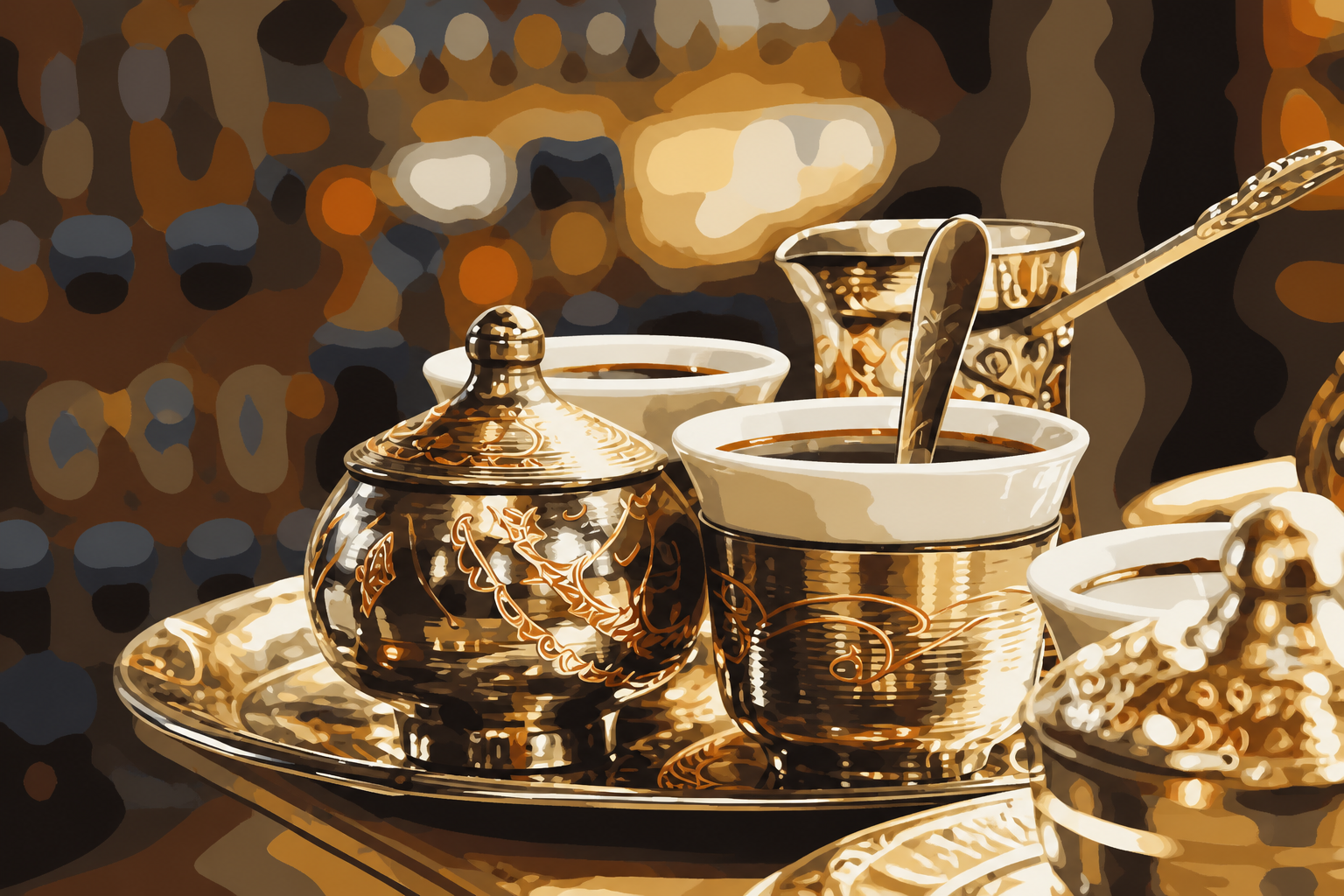
G.8aBosnian coffee set, Baščaršija
Why you are here
Today you learn the full now-map for doing-words you already say in pieces. Book 1 gave you želim, volim, and imam as ready chunks. Those endings are the same family on almost every everyday verb. English hangs I, you, and they in front and leaves the verb mostly still. Bosnian hangs the who on the end of the doing-word. This chapter is only the present map. Aspect and past wait for later.
Why English lies
English lies because the lines I want, you want, and they want keep the word want almost untouched. A tiny s on wants is the whole show for he and she. Bosnian changes the end for nearly every who, so želim is I want, želiš is you want, and želi is he or she wants. The little words ja and ti are optional once the ending is clear. Schools call this prezent, which means the present. You can keep saying the now-map and still be right.
A line you already say
Book 1 already gave you Ana’s line Želim kahvu, which means I want coffee. That m on želim is the I mark. Emir can say Želiš kahvu when he means you want coffee, and Amira can say Želi kahvu when she means he or she wants coffee. Same verb stem. Different who. Today you stop treating želim as a frozen tourist phrase and start seeing the whole row.
The pattern
Most everyday verbs take a short who-ending in the present. Ja takes m, so želim and radim. Ti takes š, so želiš and radiš. On, ona, and ono often take a bare ending, so želi and radi. Mi takes mo, and vi takes te. They often take e, as in žele and rade, and some families take ju instead, as in piju from piti. Željeti and raditi are honest samples from the same town words you already know. You can keep ja and ti off the page when the ending already says who, and you learn the row first before watching for a few pests that refuse the cheat sheet.
| Who | Ending | željeti | raditi |
|---|---|---|---|
| ja (I) | -m | želim | radim |
| ti (you) | -š | želiš | radiš |
| on / ona (he / she) | (bare) | želi | radi |
| mi (we) | -mo | želimo | radimo |
| vi (you all / polite) | -te | želite | radite |
| oni (they) | -e | žele | rade |
Pijem, radiš, and žele are the same who-row on different people at the same table.
The pests
Two everyday verbs refuse the neat row, and you should memorize them early because Book 1 already uses both habits. Ići means to go, but the present is idem, ideš, ide, idemo, idete, idu, not a fake ićim. Biti means to be, and the short present is sam, si, je, smo, ste, su. Saying ja biti or ja ićim invents a tourist form. Do not argue with idem and sam. Just file them beside the regular map.
The bit that tricks you
The trap is to keep saying ja želim as if ja does the real work. The m already marks I. Bosnian often drops ja, ti, and even on when the ending is clear. The other trap is to treat every Book 1 chunk as a frozen postcard. Volim, imam, and govorim are the same who-map as želim. If you invent English-style I want without the Bosnian ending, you erase the whole system this chapter teaches.
| English habit | Bosnian fix | Why |
|---|---|---|
| I want coffee. | Želim kahvu. | m marks I |
| You want coffee. | Želiš kahvu. | š marks you |
| I go. | Idem. | ići pest, not ićim |
| I am here. | Ovdje sam. | biti pest, short sam |
Idem is the present of ići, a pest that refuses a fake ićim when someone is going now.
Sample words
Tap a word to hear it.
Look at these
Each line has a speaker. Tap the line to hear it. On some lines you can record yourself for a short Speak Check.
Speak Check listens to your recording and sends back short tips.
Speak Check listens to your recording and sends back short tips.
Speak Check listens to your recording and sends back short tips.
Try these
I want coffee. Which form?
You want coffee. Which form?
She wants coffee. Which form?
I work today. Which form?
I go home. Which form?
I am here. Which form?
We want coffee. Which form?
Someone says Ja želim every time. What is the soft fix?
Polite you want coffee. Which form?
They want coffee. Which form?
Quick check
1. What is today’s system?
2. The m on želim marks which who?
3. Why is Idem kući correct, not Ićim kući?
4. Ovdje sam uses which pest verb?
5. Želite kahvu is which who?
6. What comes next after the present map?
Next
You now have the present who-map behind želim, radim, and the Book 1 chunks, plus the pests idem and sam. Chapter 9 is why Bosnian often needs two verbs for one English verb, eat versus eat up. The who-endings stay. The finish-line changes.
