Pridjevi
Moja kahva names the coffee with she-matching my, and moju kahvu wants that same drink.
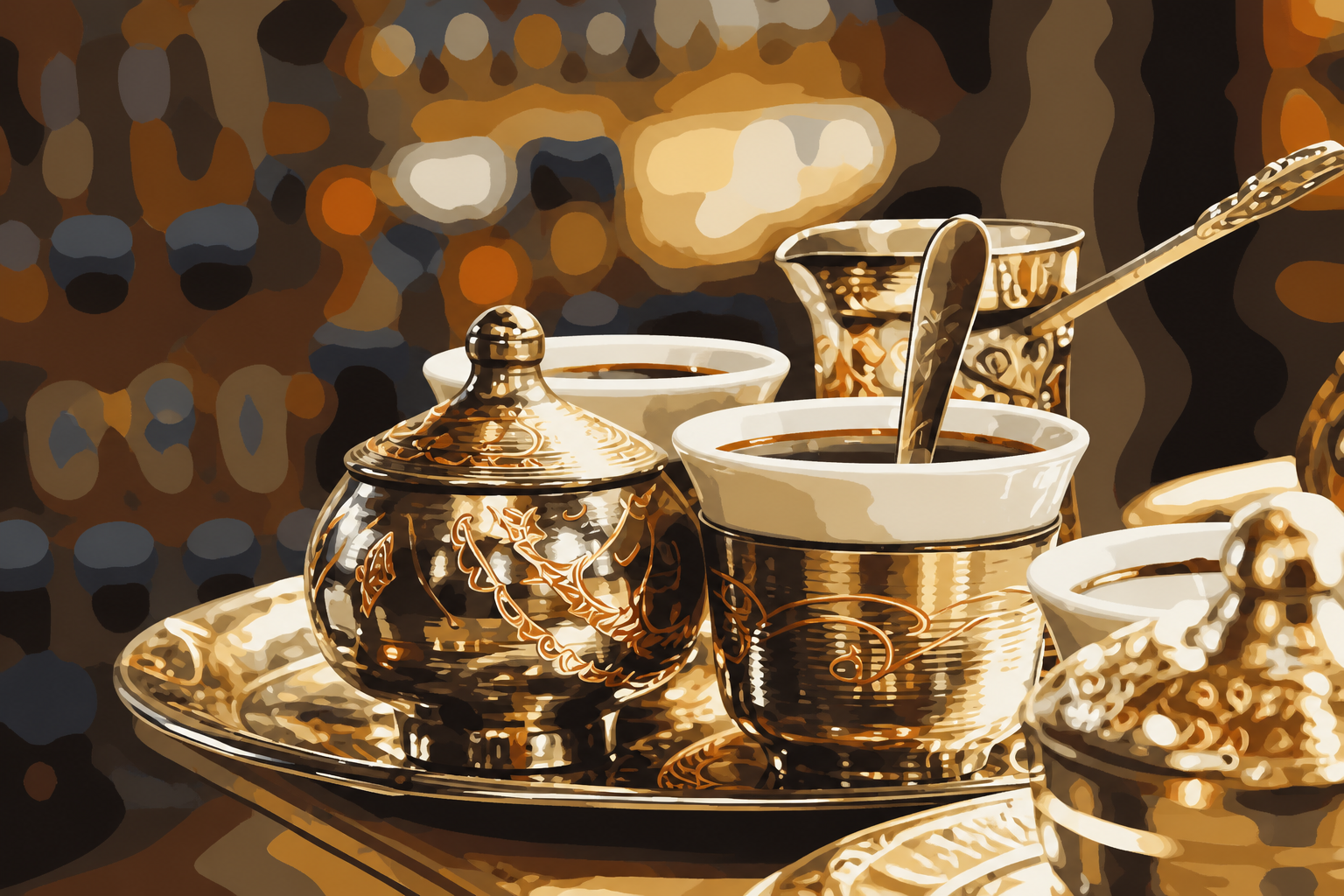
G.6aBosnian coffee set, Baščaršija
Why you are here
Today you learn why Ana says moja kahva when she names her coffee, and moju kahvu when she wants that same coffee. Matching words like my have to ride with the pile and the job on the thing-word. English keeps my still in every job, while Bosnian dresses my again for coffee, a bridge, or beer. Chapters 1 through 5 filed the piles and the jobs. This chapter is only the matching ride on the same small word set.
Why English lies
English lies because my coffee stays my coffee in every job. You say this is my coffee and I want my coffee with the same my. Bosnian matching words copy the pile first, so coffee takes a she form of my, a bridge takes a he form, and beer takes a leftover form. Then those matching words copy the job too, so name-it moja kahva becomes want-it moju kahvu on the same she-word. Schools call these matching words pridjevi, which means adjectives, and the my set is the possessive kind. You can keep saying matching words and still be right.
A line you already say
Book 1 already gave you Ana’s line Volim moju sobu, which means I love my room. The room is a she-word in the want-it job, so my became moju to ride with it. Today you put that same ride on coffee, the house, the bridge, and beer. Moja kahva names the drink with she-matching my. Moju kahvu wants that same drink, and my moves again with the job.
The pattern
You pick the matching form from the pile of the thing-word, then dress it for the job. She-pile coffee takes moja in the name-it job and moju in the want-it job, so moja kahva and moju kahvu stay in the she club together. He-pile bridge usually takes moj, and that moj often stays still in the want-it job on a thing, so moj most looks the same when you name it or want it. Leftover-pile beer takes moje, and moje pivo usually stays still in that same want-it job. Descriptive matching words follow the same ride, so lijepa kahva becomes lijepu kahvu when Ana wants the nice coffee. Learn the my set on coffee first. Then notice most and pivo often keep one matching shape.
| Pile | Name-it my | Want-it my |
|---|---|---|
| she (ona) | moja kahva | moju kahvu |
| he thing (on) | moj most | moj most |
| leftover (ono) | moje pivo | moje pivo |
Moja kuća and moju kuću take the same she-matching ride you just saw on coffee.
The pests
Two pests will trip you today, and both come from freezing my in English shape. The first pest is saying Želim moja kahva, which leaves my and coffee stuck in the name-it forms instead of moju kahvu. The second pest is saying moj kahva or moje kahva, which grabs the wrong pile because coffee is she. Book 1 already showed you the pile ride on people when Ana said Emir je moj prijatelj and Emir answered Ana je moja prijateljica. Copy the pile you already filed instead of inventing a fresh my for every noun.
The bit that tricks you
The trap is to hear moju and decide my somehow became a he word. It did not. Moja and moju are the same she-matching my on the same she-word coffee. The a marks the name-it job. The u marks the want-it job. The other trap is to move moj most into a fake moju most because coffee moved. He things and leftover words often keep one matching shape in that job, just as most and pivo often kept still in Chapter 2.
| English | Bosnian | What matched |
|---|---|---|
| That is my coffee. | To je moja kahva. | she pile, name-it |
| I want my coffee. | Želim moju kahvu. | she pile, want-it |
| That is my bridge. | To je moj most. | he pile |
| That is my beer. | To je moje pivo. | leftover pile |

Moj most shows the he match, and that matching shape often stays still when you want the bridge.
Sample words
Tap a word to hear it.
Look at these
Each line has a speaker. Tap the line to hear it. On some lines you can record yourself for a short Speak Check.
Speak Check listens to your recording and sends back short tips.
Speak Check listens to your recording and sends back short tips.
Speak Check listens to your recording and sends back short tips.
Try these
Amira names her coffee. Which my?
Ana wants her coffee. Which my?
Emir names his bridge. Which my?
Emir names his beer. Which my?
Ana wants her house. Which my?
Someone says Želim moja kahva. What went wrong?
Ana wants nice coffee. Which form of nice?
Emir is my friend. Which my?
Moju still matches which pile?
Why does moj most often look unchanged when you want the bridge?
Quick check
1. Ana is my friend. Which matching my?
2. To je moja kahva uses which ride?
3. Želim moju kahvu. Why not moja?
4. Which form names my beer?
5. Why is moj kahva wrong?
6. What comes next after matching words like my?
Next
You now know why moja kahva becomes moju kahvu, and why moj most and moje pivo often keep one shape in that same job. Matching words ride with the pile and the job. Chapter 7 is mene versus me, and why kod mene needs the long form. You still will not get a seven-job chart.
