Desna ili lijeva?
Lesson goals
Vocabulary
- Use right, left, and straight-ahead words to follow a route.
- Locate a street, bridge, café, or museum with distance and position words.
- Add molim vas when asking a stranger for help.
Grammar
- Use skreni for an informal singular direction.
- Use idite and other polite forms with a stranger or group.
- Reuse present-tense patterns from earlier lessons.
Culture
- Navigate near Latin Bridge in Sarajevo.
- Compare Latin Bridge with the old stone bridge in Konjic.
- Understand why marked landmine areas still restrict movement.
Watch the companion video
Watch when you can, then come back for words, dialogue, and practice on this page.
How To Speak Bosnian Directions. This speaker resource reinforces street direction phrases.
Two bridges and two city routes
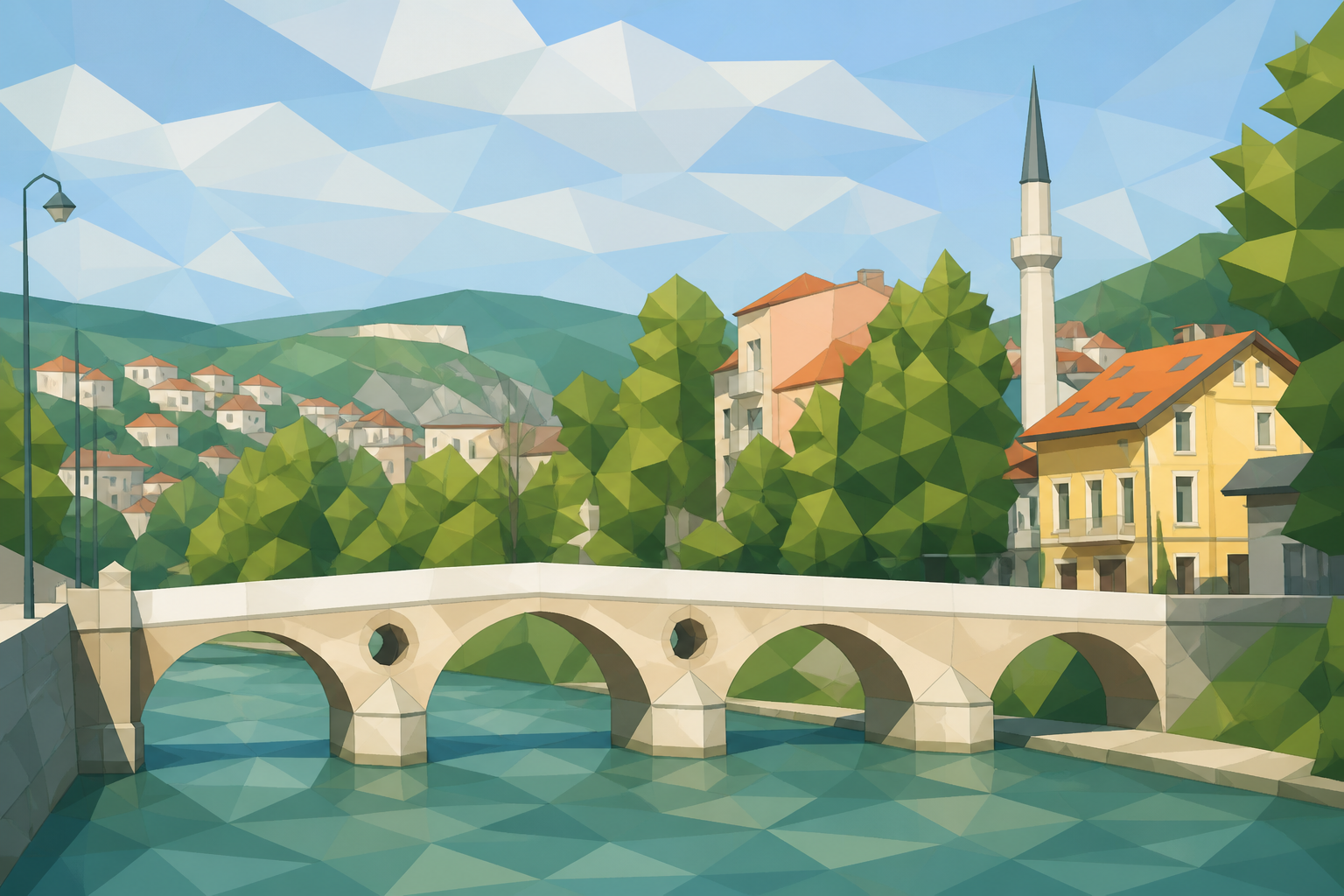
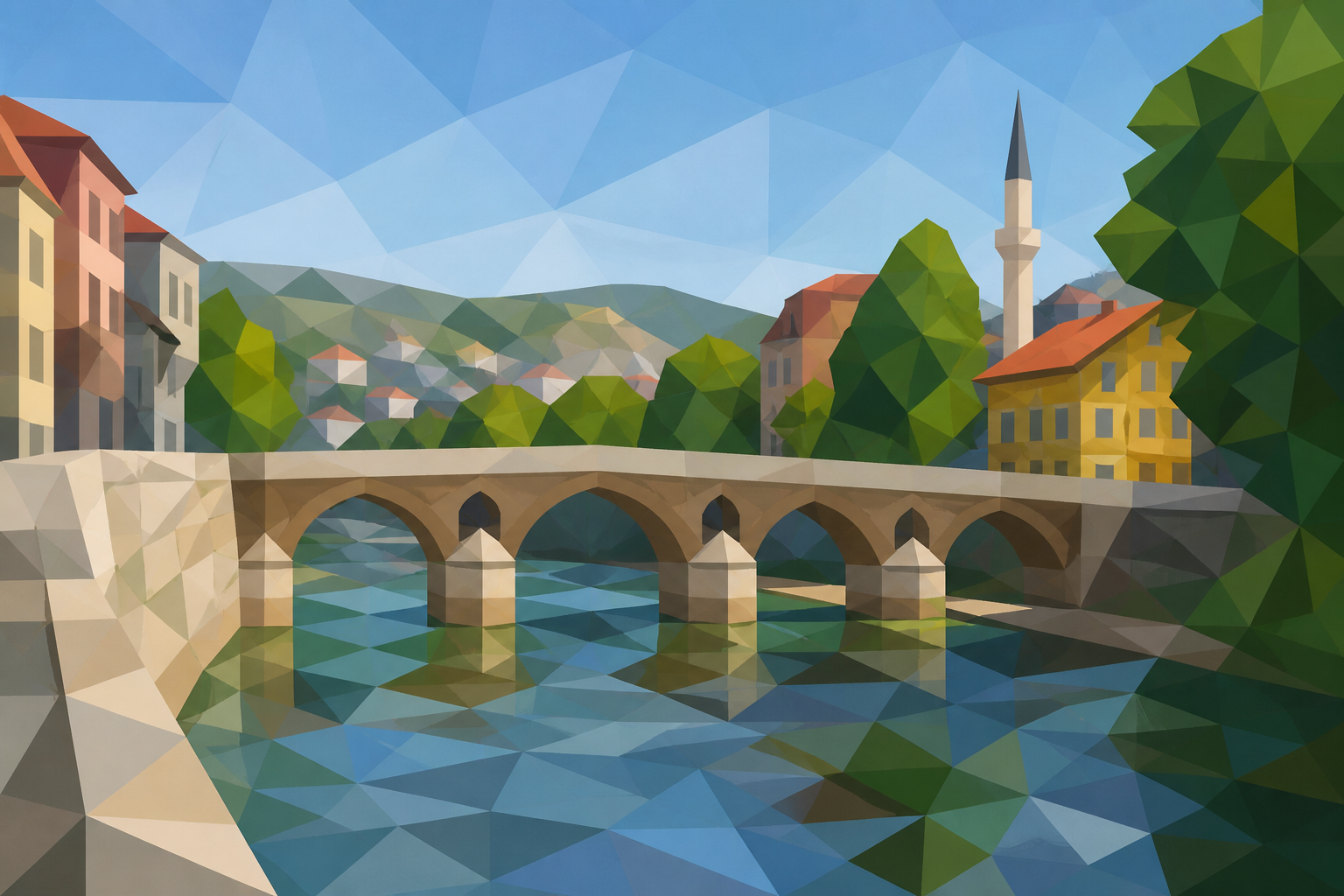
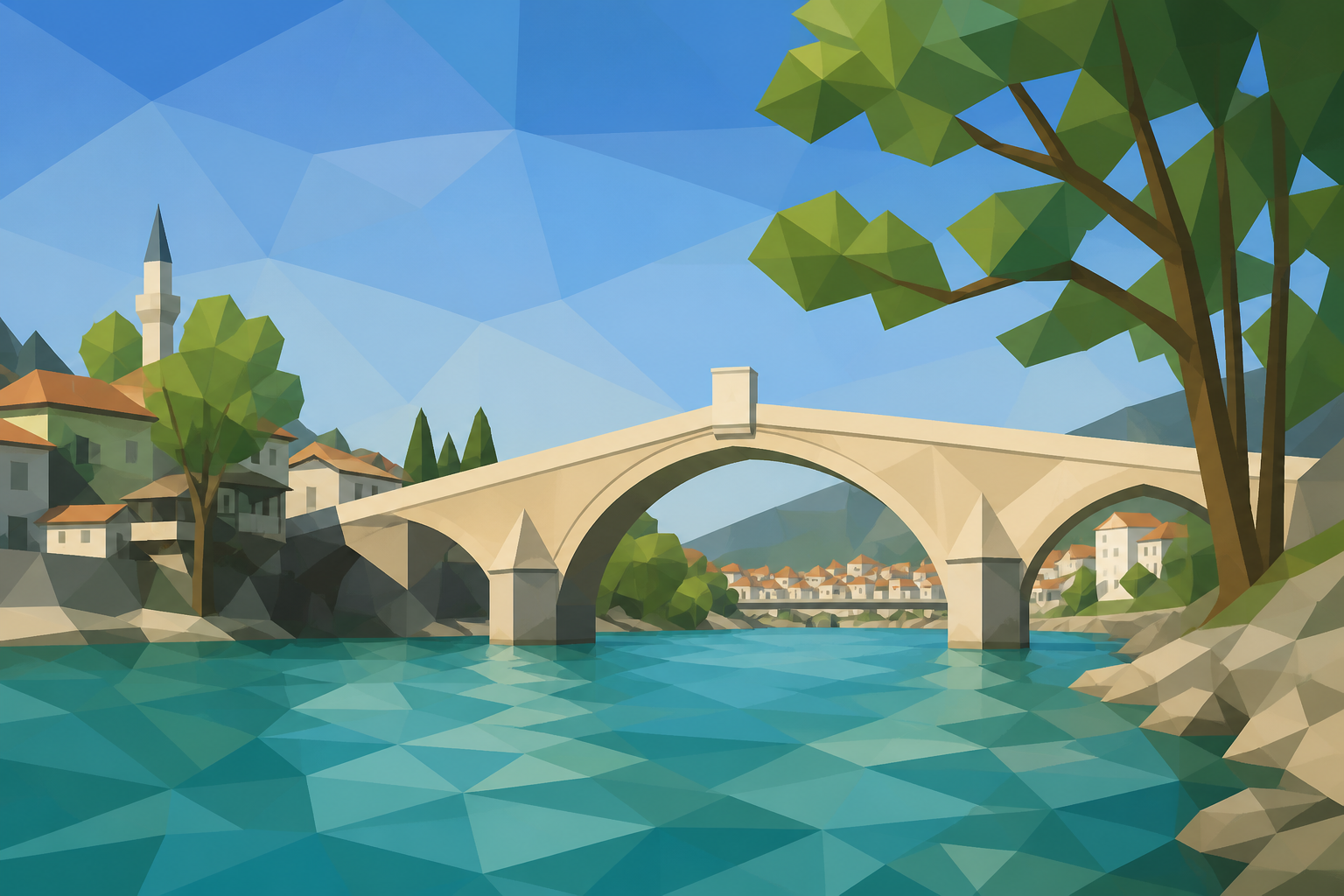
Ana loses her bearings near Latin Bridge, where the Miljacka River bends through central Sarajevo. The stone bridge is easy to recognize, but the streets around it still send her in circles. Emir has also given her a postcard of the old bridge in Konjic, a graceful reconstructed Ottoman crossing over the Neretva. The two bridges belong to different rivers and different city stories. Ana asks a passerby for help with molim vas, then follows pravo, desna, and lijeva carefully. Directions become memorable when a real landmark waits at the end of the route.
Lesson vocabulary
Tap a word to hear it. Use Loop and slower speed when you want to shadow.
Grammar
Skreni and idite
Use skreni when you tell one familiar person to turn. Use idite when you address a stranger politely or speak to more than one person. Add a direction word to make the instruction complete.
- Skreni lijevo.: Turn left.
- Idite pravo.: Go straight.
- Idite desno.: Go right.
Polite directions with molim vas
Molim vas adds please when you speak politely to a stranger or a group. Pair it with the polite imperative idite. A calm tone and the polite form make a direction sound helpful rather than abrupt.
- Idite pravo, molim vas.: Go straight, please.
- Skrenite lijevo, molim vas.: Turn left, please.
- Pomozite mi, molim vas.: Please help me.
Locate a landmark
Use blizu and daleko to describe distance. Use ispred for in front of and iza for behind. Connect these words to a visible landmark such as a bridge, street, café, or museum.
- Most je blizu.: The bridge is near.
- Kafić je ispred mosta.: The café is in front of the bridge.
- Muzej je iza ugla.: The museum is behind the corner.
Say again
Warm up with four lines you already know.
- Odakle si?: Where are you from?
- Ja sam iz Amerike.: I am from America.
- Hajde da idemo.: Let us go.
- Molim vas.: Please.
Lesson A. Follow the route
Stand at an imaginary street corner near Latin Bridge and listen for three core directions. Pravo sends you straight ahead, desno sends you right, and lijevo sends you left. The vocabulary list gives desna and lijeva because they can describe a feminine noun such as ulica or strana, while the direction phrases use desno and lijevo. Add most and ulica so each instruction points toward something visible. Ana checks every bridge against her Konjic postcard and briefly follows the wrong river. Trace a route with your finger while saying each turn. Movement makes the contrast between right, left, and straight much easier to retain.
- Keep the full ije spelling in lijeva and lijevo.
- Use pravo when the route continues straight ahead.
- Connect every turn to a visible street or bridge.
Match direction words
Match each Bosnian direction word with its English meaning.
Lesson B. Ask and answer politely
Use a polite form when you ask a stranger for directions. Begin with Oprostite or Molim vas, then listen for idite, skrenite, blizu, daleko, ispred, or iza. A friend may tell Ana Skreni lijevo, but a passerby can say Idite pravo, molim vas. The difference marks the relationship and number of people rather than a different route. Ana repeats each instruction to confirm it before walking away. Courtesy helps the exchange move smoothly. Practice a short exchange in which one person asks for the bridge and another gives two steps. End with Hvala so the interaction sounds complete and courteous in a real Sarajevo street.
- Use idite or skrenite when you address a stranger politely.
- Repeat the route in your own words before you begin walking.
- Finish a request for help with molim vas and a response with hvala.
Gdje je Latinska ćuprija?
Amira points Ana toward Latin Bridge. Ana asks a passerby when the streets confuse her.
Play the full scene once. Then tap a line to hear it. On some lines you can record yourself for a short Speak Check.
Speak Check listens to your recording and sends back short tips.
Speak Check listens to your recording and sends back short tips.
Speak Check listens to your recording and sends back short tips.
Practice
Your keyboard may not have č ć š ž đ. Tap the accent buttons under each box to insert them.
Write the Bosnian instruction that tells one familiar person to turn left.
Hint: Use skreni and lijevo.
Write the polite Bosnian instruction for Go straight.
Hint: Begin with Idite.
Write the Bosnian sentence for The bridge is near.
Hint: Use most and blizu.
Write the Bosnian phrase for in front of.
Hint: The word begins with isp.
Write the Bosnian phrase for behind.
Hint: The word begins with i.
Write the polite Bosnian phrase for please.
Hint: The second word is vas.
Write the Bosnian word for street.
Hint: The word begins with ul.
Fun facts
Latin Bridge carries layered history
Latin Bridge crosses the Miljacka River in central Sarajevo. A nearby street corner became internationally known after the 1914 assassination of Archduke Franz Ferdinand. The bridge itself has older Ottoman roots and has served ordinary city movement for generations. It is both an everyday crossing and a landmark tied to world history.
Konjic rebuilt an older crossing
The old stone bridge in Konjic crosses the Neretva River. The original Ottoman bridge was destroyed during the Second World War, and a careful reconstruction opened in 2009. Its stone arch again links the two sides of the town center. The restored crossing gives direction practice a second bridge beyond Sarajevo.
Lijeva keeps its full spelling
The Bosnian word for left is lijeva in the feminine form used with strana or ulica. The ije sequence is important in the course spelling. Saying the word slowly helps the middle sound remain audible. Accurate lijeva keeps a left turn from becoming a spelling shortcut.
Čuj Bosnu with street directions
A Bosnian teacher models direction language in a voice outside the story cast.
Speaker · How To Speak Bosnian · Street directions lesson · focus ~45-90 seconds
Watch & listen
How To Speak Bosnian on YouTube (YouTube Terms of Service (embed))
Listen for right, left, or straight ahead in the speaker's route.
Press play on the video above. After you have listened, show the gist question.
Bosnia today
Landmines still restrict safe movement
Landmines and other unexploded ordnance still restrict movement in parts of Bosnia and Herzegovina. Mines were placed around former front lines, roads, fields, and settlements during the war, and floods or erosion can shift dangerous devices from recorded locations. Clearance teams have removed many hazards, but the work is slow, technical, and expensive. Residents and hikers must obey warning signs, stay on known routes, and never enter a marked area. Near contaminated land, a direction is not just polite guidance. It is a safety instruction.
Wikipedia article about landmines in Bosnia and Herzegovina

Practice game
True or false about directions
Decide whether each sentence correctly describes Lesson 15.
Idite can be a polite or plural command.
Daleko means near.
Ana is looking for Latin Bridge.
The postcard bridge is in Mostar.
Quick review
A few words from this lesson, plus ones you missed before. Flip the card, then mark how it went.
Card 1 / 5
More resources
- How To Speak Bosnian Directions. This speaker resource reinforces street direction phrases.
- Next lesson. Lesson 16 covers tickets and travel phrases.
- Book 1 curriculum. The curriculum page lists every Book 1 lesson.
Lesson quiz
Or open the full-page quiz: Lesson 15 quiz
Lesson 15 section quiz
1. What does pravo mean in a direction?
2. Which instruction tells one familiar person to turn left?
3. Which word means bridge?
4. Which phrase means behind?
5. Where is Ana trying to go?
6. Which form is polite or plural?
7. Which other bridge appears on a postcard?
8. Why must travelers respect marked mine areas?
