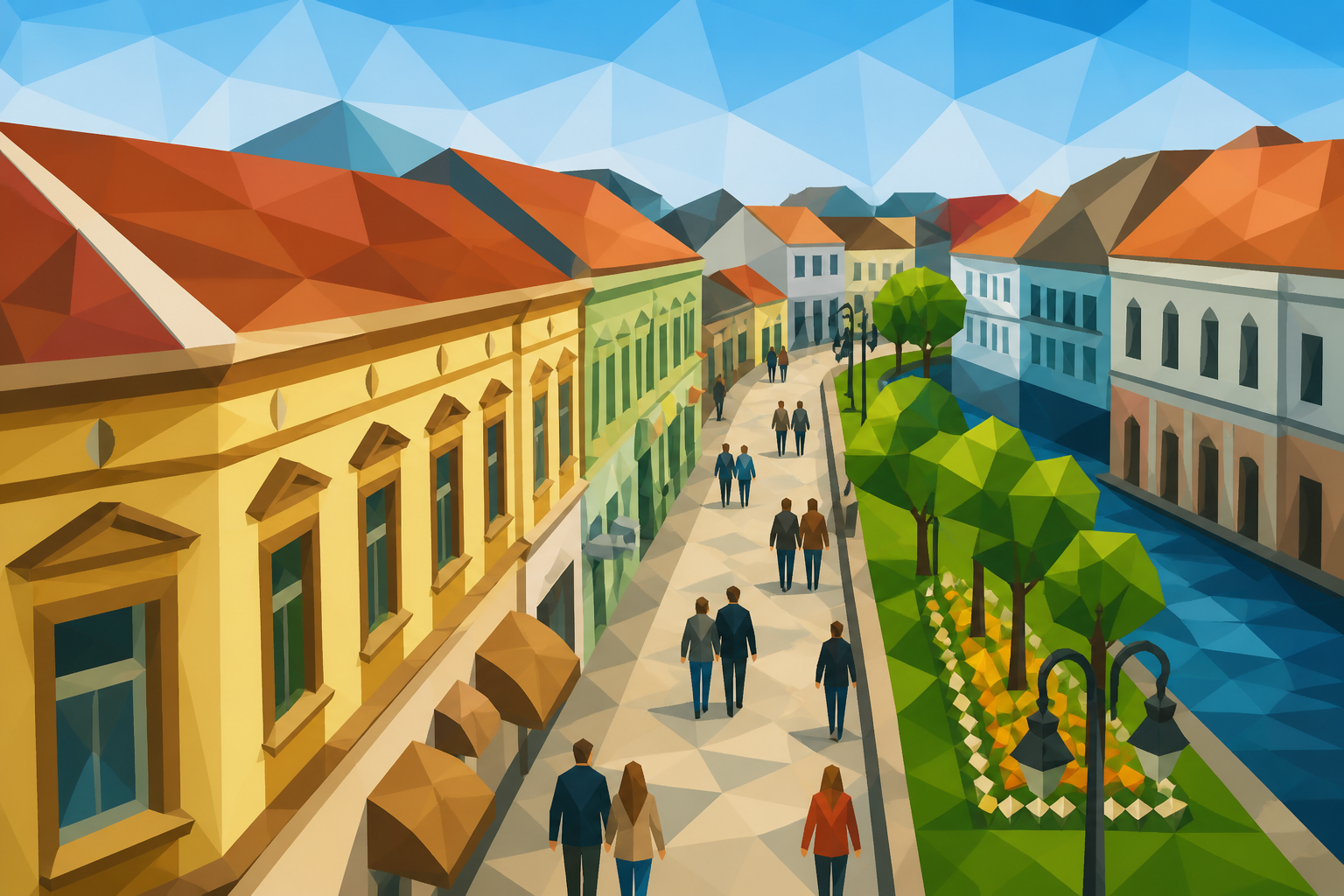
Ljudi iz BiH
Lesson goals
Vocabulary
- Name people, country, language, and nationality terms used in simple introductions.
- Use govorim and govoriš when discussing languages.
- Ask ko and odakle questions in a respectful conversation.
Grammar
- Say Govorim bosanski or Govorim engleski.
- Ask Odakle si? And answer with Ja sam iz plus a place.
- Reuse present-tense patterns from earlier lessons.
Culture
- Keep identity talk gentle by beginning with place and language.
- Visit Brčko as a river city in the northeast.
- Understand Brčko District's distinct civic position.
Watch the companion video
Watch when you can, then come back for words, dialogue, and practice on this page.
How To Speak Bosnian Countries. This speaker resource models country and nationality vocabulary.
Kahva, language, and a view of Brčko
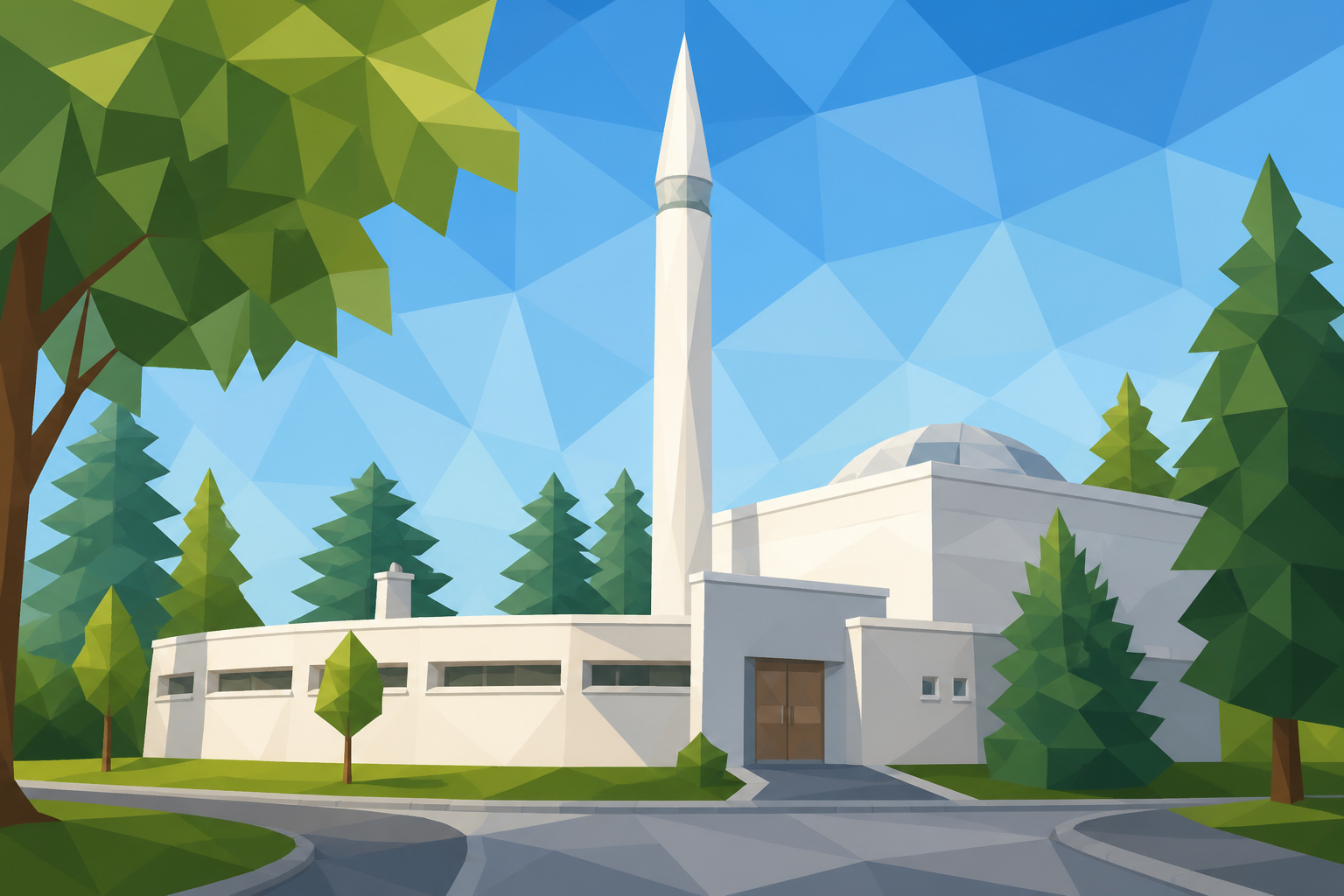
Ana and Emir talk over kahva about where they come from and which languages they speak. Ana is from America and is learning Bosnian. Emir is from Sarajevo and shows her photographs of Brčko, a river city in the northeast of Bosnia and Herzegovina. Its promenade and white mosque place the conversation in a real, diverse city. People across the country use many names for themselves, their communities, and closely related language standards. This lesson does not force those identities into one answer. It gives Ana gentle questions about place and language, then leaves room for each person to describe themselves.
Lesson vocabulary
Tap a word to hear it. Use Loop and slower speed when you want to shadow.

Grammar
Govorim bosanski
Use govorim to say which language you speak. Bosnian language names usually follow the verb without an article. Replace bosanski with engleski when you describe English.
- Govorim bosanski.: I speak Bosnian.
- Govorim engleski.: I speak English.
- Malo govorim bosanski.: I speak a little Bosnian.
Odakle si?
Ask Odakle si? When you want to know where someone is from. Answer with Ja sam iz followed by a place. A place answer shares useful information without forcing a larger identity label.
- Odakle si?: Where are you from?
- Ja sam iz Amerike.: I am from America.
- Ja sam iz Sarajeva.: I am from Sarajevo.
Ko govori?
Use ko when you ask who a person is or who does an action. Pair ko with govori to ask who speaks a language. Answer with a person's name and a complete sentence.
- Ko govori bosanski?: Who speaks Bosnian?
- Emir govori bosanski.: Emir speaks Bosnian.
- Ko je iz Brčkog?: Who is from Brčko?
Say again
Warm up with four lines you already know.
- Hajde da idemo u park.: Let us go to the park.
- Hoćeš li šetati?: Do you want to walk?
- Čekaj!: Wait!
- Kakvo je vrijeme?: How is the weather?
Lesson A. Ask about place and language
Begin with two questions that let another person choose how much to share. Odakle si? Asks where someone is from, while Govoriš li bosanski? Asks whether the person speaks Bosnian. Ana answers Ja sam iz Amerike and adds Učim bosanski. Emir answers Ja sam iz Sarajeva and says Govorim bosanski. Practice the city or country answer that is true for you. Then name a language you speak, study, or want to learn. The answer remains yours. These patterns are useful because they focus on personal experience. They do not require you to guess a stranger's identity from a name, accent, religion, or appearance.
- Let each person choose the place name that best answers Odakle si?
- Use govorim for your own language and govoriš when addressing one person.
- Avoid guessing a person's identity before they describe themselves.
Match people and language words
Match each Bosnian word with its English meaning.
Lesson B. Talk about people with care
Add ljudi, zemlja, jezik, narod, and ko to widen the conversation. Bosanac and Bosanka can describe a Bosnian man or woman, while Amerikanka describes Ana as an American woman. These words are useful, but no single label tells a person's whole story. Emir explains that people in Bosnia and Herzegovina have many names for themselves and may emphasize a city, region, community, or language. Ana keeps her questions simple and listens to the answer. Use Ko govori bosanski? In a classroom or café, then answer with a complete sentence. The best practice combines accurate grammar with room for personal choice.
- Treat nationality words as options that people may use for themselves.
- Use place and language questions before asking for more personal detail.
- Answer ko with a named person and a complete verb phrase.
Razgovor uz kahvu
Ana and Emir sit with kahva while Amira arranges postcards from Brčko.
Play the full scene once. Then tap a line to hear it. On some lines you can record yourself for a short Speak Check.
Speak Check listens to your recording and sends back short tips.
Speak Check listens to your recording and sends back short tips.
Speak Check listens to your recording and sends back short tips.
Practice
Your keyboard may not have č ć š ž đ. Tap the accent buttons under each box to insert them.
Write the Bosnian sentence for I speak Bosnian.
Hint: Begin with Govorim.
Write the Bosnian sentence for I speak English.
Hint: Use engleski.
Write the Bosnian question that asks where someone is from.
Hint: Begin with Odakle.
Write the Bosnian sentence for I am from Sarajevo.
Hint: Use Ja sam iz.
Write the Bosnian question for Who speaks Bosnian?
Hint: Begin with Ko.
Write the Bosnian word for language.
Hint: The word begins with jez.
Write the Bosnian word for people.
Hint: The word begins with lj.
Fun facts
Place can open a gentle conversation
A place question can begin an identity conversation without trying to define a person. Odakle si? Lets someone answer with a city, region, country, or another place that matters. The answer can remain simple or lead to more detail if both speakers want it. Place and language provide a respectful starting point.
Brčko sits on the Sava
Brčko stands on the Sava River in the northeast of Bosnia and Herzegovina. Its river position helped make the city an important trade and transport point. The promenade gives residents a public place beside that wider regional route. The city connects local life with a river that crosses borders.
Language names can vary
People in Bosnia and Herzegovina may name closely related language standards in different ways. Bosnian, Croatian, and Serbian are all heard in the country, and speakers understand one another to a high degree. This lesson practices bosanski because that is the course language. Respecting the name a speaker uses keeps language learning courteous.
Čuj Bosnu with countries and origins
A Bosnian teacher models country words that support gentle introductions.
Speaker · How To Speak Bosnian · Countries and origins lesson · focus ~45-90 seconds
Watch & listen
How To Speak Bosnian on YouTube (YouTube Terms of Service (embed))
Listen for a country or origin word that could answer Odakle si?
Press play on the video above. After you have listened, show the gist question.
Bosnia today
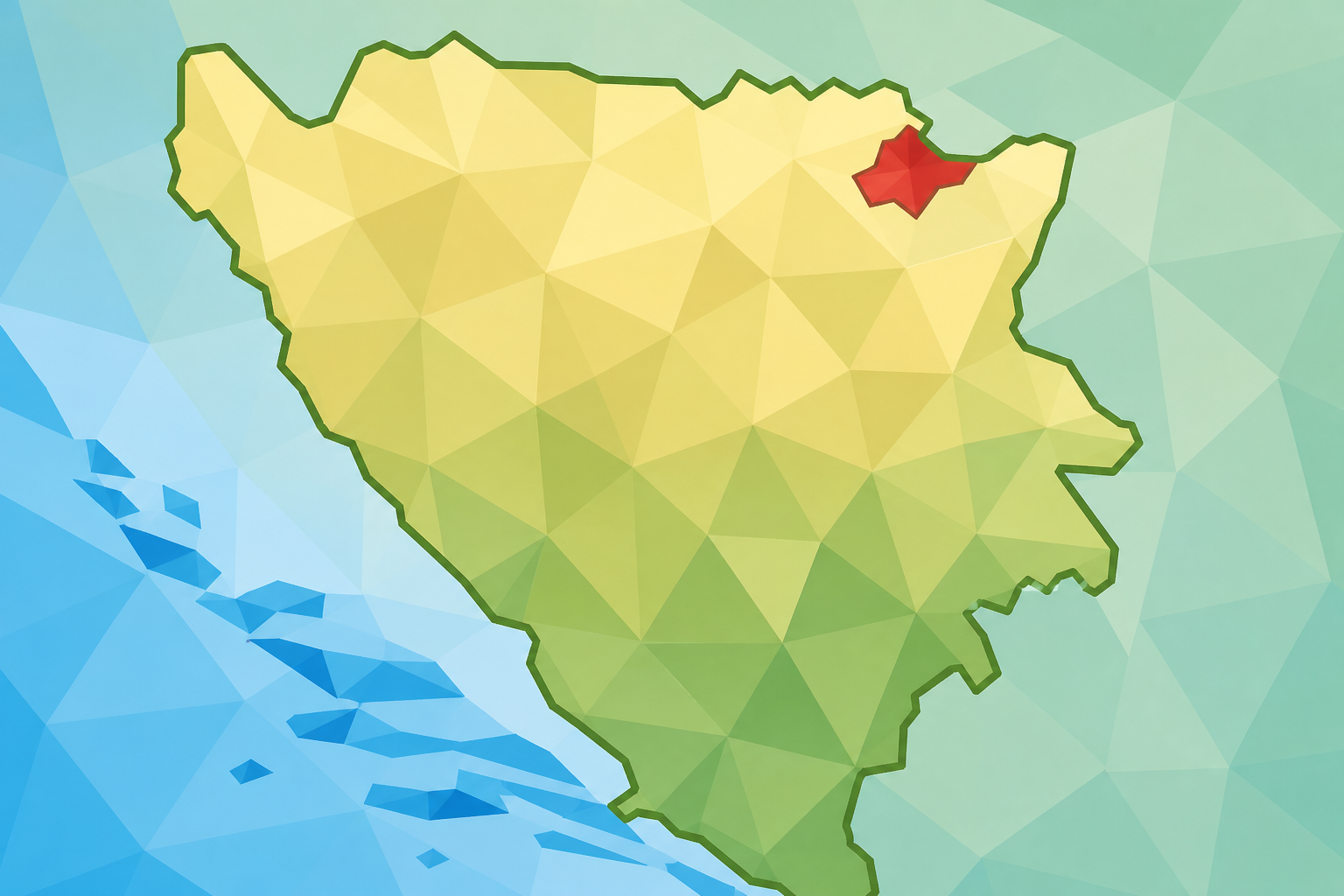
Brčko District has a distinct civic role
Brčko District has a distinct place in the constitutional structure of Bosnia and Herzegovina. It is a self-governing district held in condominium by both entities, rather than governed as an ordinary municipality within either one. An international supervisory system was created to support the postwar arbitration award and the district's multiethnic institutions. Local government in Brčko operates alongside this unusual national and international framework, a reminder that the country's civic map includes more than the two entities alone.
Wikipedia article about Brčko District
Practice game
True or false about introductions
Decide whether each sentence follows the lesson.
Odakle si? Asks where someone is from.
Govorim means that you speak.
Ana is from America and is learning Bosnian.
One identity label tells every part of a person.
Quick review
A few words from this lesson, plus ones you missed before. Flip the card, then mark how it went.
Card 1 / 5
More resources
- How To Speak Bosnian Countries. This speaker resource models country and nationality vocabulary.
- Next lesson. Lesson 14 reviews Lessons 8 through 13 at Amira's.
- Book 1 curriculum. The curriculum page lists every Book 1 lesson.
Lesson quiz
Or open the full-page quiz: Lesson 13 quiz
Lesson 13 section quiz
1. What does ljudi mean?
2. Which sentence means I speak Bosnian?
3. Which question asks where someone is from?
4. Which word means language?
5. How does Ana describe her background?
6. Where is Emir from?
7. What is special about Brčko District?
8. What is the lesson's approach to identity?
