Zašto je teško?
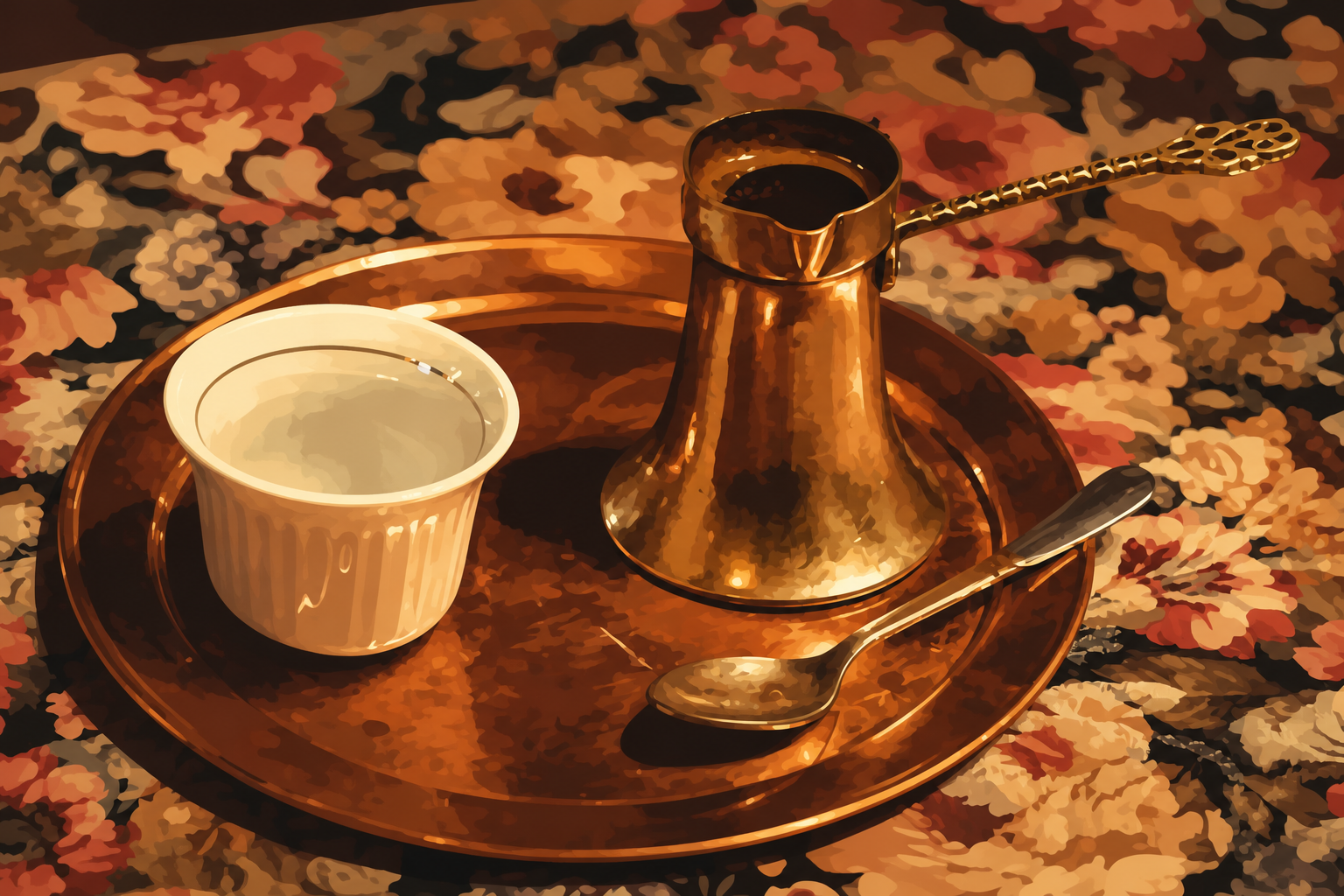
Kahva is the drink English would never change, and this map starts with why Bosnian will.
Why you are here
This chapter is the map of the notebook, not a full Bosnian grammar lesson. You may already know Ana's Book 1 line Želim kahvu, which means I want coffee. That line is the same drink as kahva, with a different ending because the job in the sentence changed. When you close this page you should know what this book will teach later, and what it will wait on. English hides the work in little words like the and to. Bosnian hides it on the end of words like coffee.
Why English lies
English lies because it keeps the word coffee the same in every job. You can say this is coffee and I want coffee without touching a single letter. You already do a tiny version of the Bosnian trick with people when you say I if you do the thing and me if the thing happens to you. Coffee in English never bothers. Bosnian coffee does, so the list word kahva becomes kahvu when Ana wants the drink. That one change is not a tense, and it is not a new pile. It is a preview of work this book will unpack one system at a time.
A line you already say
Book 1 already gave you Ana's line Želim kahvu, which means I want coffee. She does not repeat the list word kahva, because wanting the drink is a different job from naming it. Today you only need the shock that the word changed. The rest of this notebook explains that change in pieces, one system a day, with the same coffee, bridge, and house.
The map
This notebook teaches four big systems, then a last habit about little words, and it refuses to teach them on the same page. Piles file a word as he, she, or leftover. Jobs change the end of a thing-word when you name it, want it, have none of it, give it, or go with it. Matching words like my have to ride with that pile and that job. Doing-words change for time, and for whether the action is finished. Little words like se then sit in second place in the sentence. You will meet each system on its own day, with the same coffee, bridge, and house.
| System | Plain English | Later |
|---|---|---|
| Piles | He, she, leftover. File the word. | Chapter 1 |
| Jobs | Name it, want it, none of it, to it, with it. | Chapters 2 to 5 |
| Matching | My has to ride with coffee. | Chapters 6 and 7 |
| Doing-words | Now, past, future, eat vs eat up. | Chapters 8 to 11 |
| Little words | They sit in second place. | Chapter 12 |
Kuća is one of the same few words this notebook will reuse while each system waits its turn.
How to use this book
Use this book one system at a time, with a small chart, a few tries, and a check. The same coffee, bridge, house, Ana, and Emir come back in every chapter so you are not memorizing a new grocery list. You can start here without finishing Book 1, and the sentences will still make sense. If you already walked Book 1, you get a bonus because you have already said the line.
The mix-up to skip
The trap is to call every change a tense. Tense is time on a doing-word, like now versus past. Most of the headache is not time. Thing-words change for the job in the sentence, and they also sit in a pile. Those are different systems. Keep the map in your pocket, and wait for one chapter to open one box. Do not ask tomorrow for every ending on one page.
Most is a bridge on the map, and its pile day comes before any job chart.
Sample words
Tap a word to hear it.
Look at these
Each line has a speaker. Tap the line to hear it. On some lines you can record yourself for a short Speak Check.
Speak Check listens to your recording and sends back short tips.
Speak Check listens to your recording and sends back short tips.
Speak Check listens to your recording and sends back short tips.
Try these
In English, does coffee change when you want it?
In Želim kahvu, did kahva stay kahva?
Where does Bosnian put the work?
Are the seven jobs on coffee the same thing as tenses?
What is this book?
What does this chapter teach you to do?
Which system comes first after this map?
The vocab list shows kahva. Is that the only form?
Quick check
1. Why does Bosnian feel harder than English at first?
2. What is this chapter?
3. In English, I want coffee uses the same coffee as this is coffee. What did Bosnian do?
4. Why is naming coffee versus wanting coffee not a tense?
5. Old English is the English of England about a thousand years ago. Why don't you speak it?
6. What comes next?
Next
You now have the map. Chapter 1 files coffee into a pile so later jobs can pick the right ending. That pile is why kahva is a she. You still will not get a seven-job chart tomorrow.
