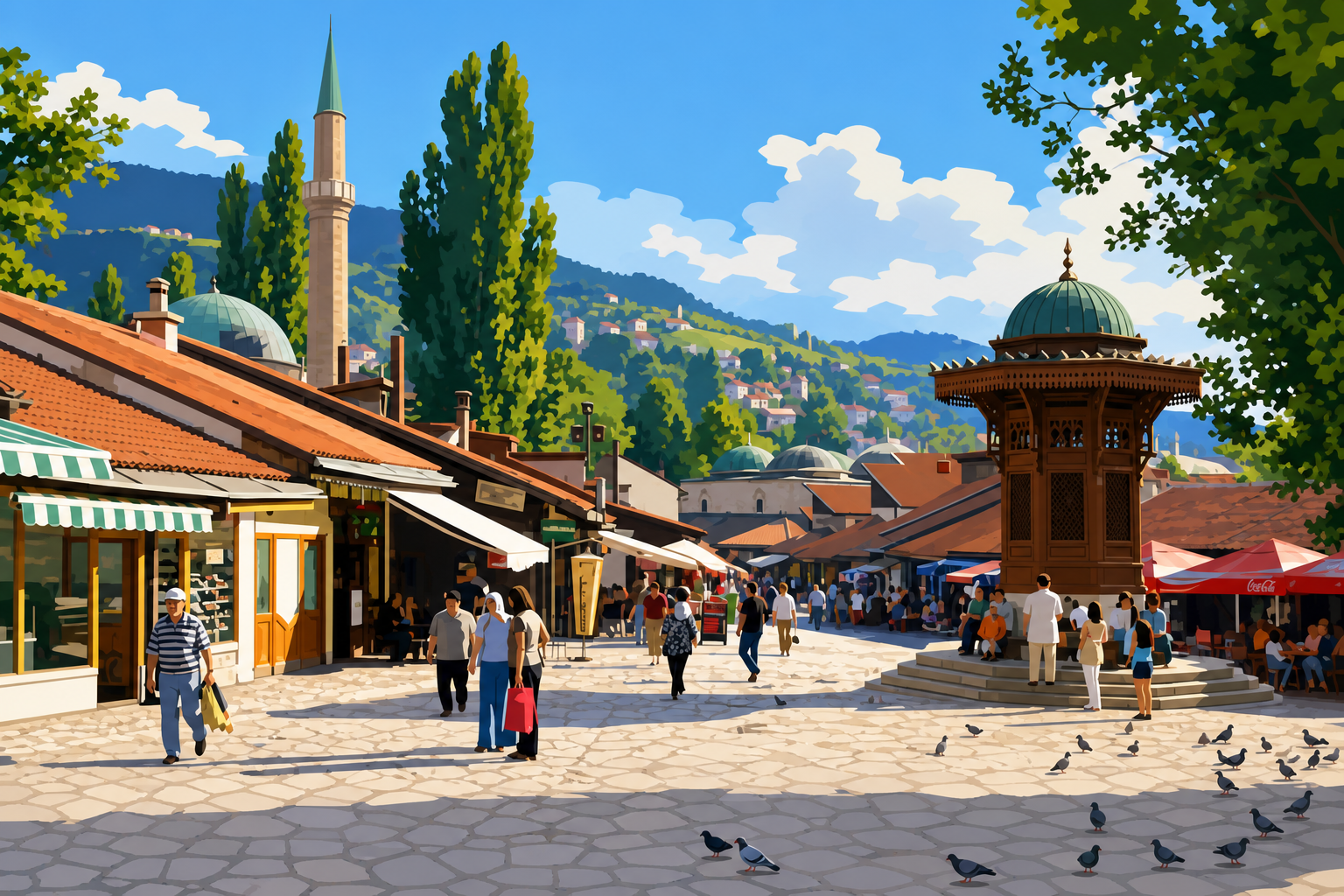
Ja sam Ana
Lesson goals
Vocabulary
- Use the personal pronouns ja, ti, on, and ona
- Introduce yourself with zovem se, ime, iz, and drago mi je
- Learn the place word Sebilj
Grammar
- Use the present of biti with sam, si, and je
- Introduce yourself with Ja sam and Zovem se
- Reuse familiar present-tense frames from earlier lessons.
Culture
- Sebilj as Baščaršija’s meeting fountain
- Warm first meetings in Sarajevo
Watch the companion video
Watch when you can, then come back for words, dialogue, and practice on this page.
How to speak Bosnian (YouTube). Companion video for Lesson 2
Sebilj. Where people meet
The Sebilj is a wooden fountain in the middle of Baščaršija’s main square. Locals and visitors use it as a landmark: “Kod Sebilja” means meet me at the fountain. Pigeons gather, photos happen, and first hellos often start here. Emir waits for Ana at Sebilj. A classic Sarajevo rendezvous.
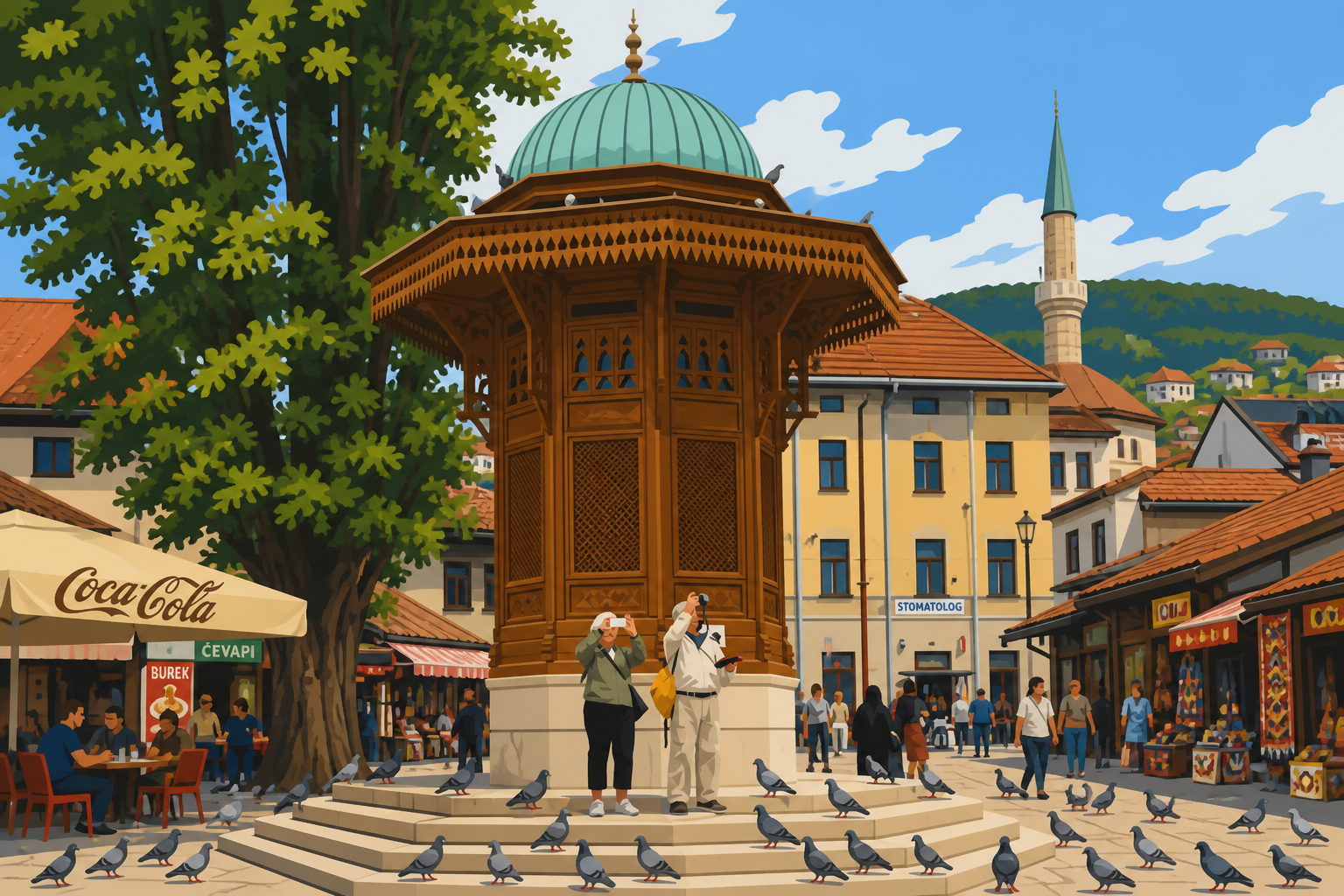
Lesson vocabulary
Tap a word to hear it. Use Loop and slower speed when you want to shadow.
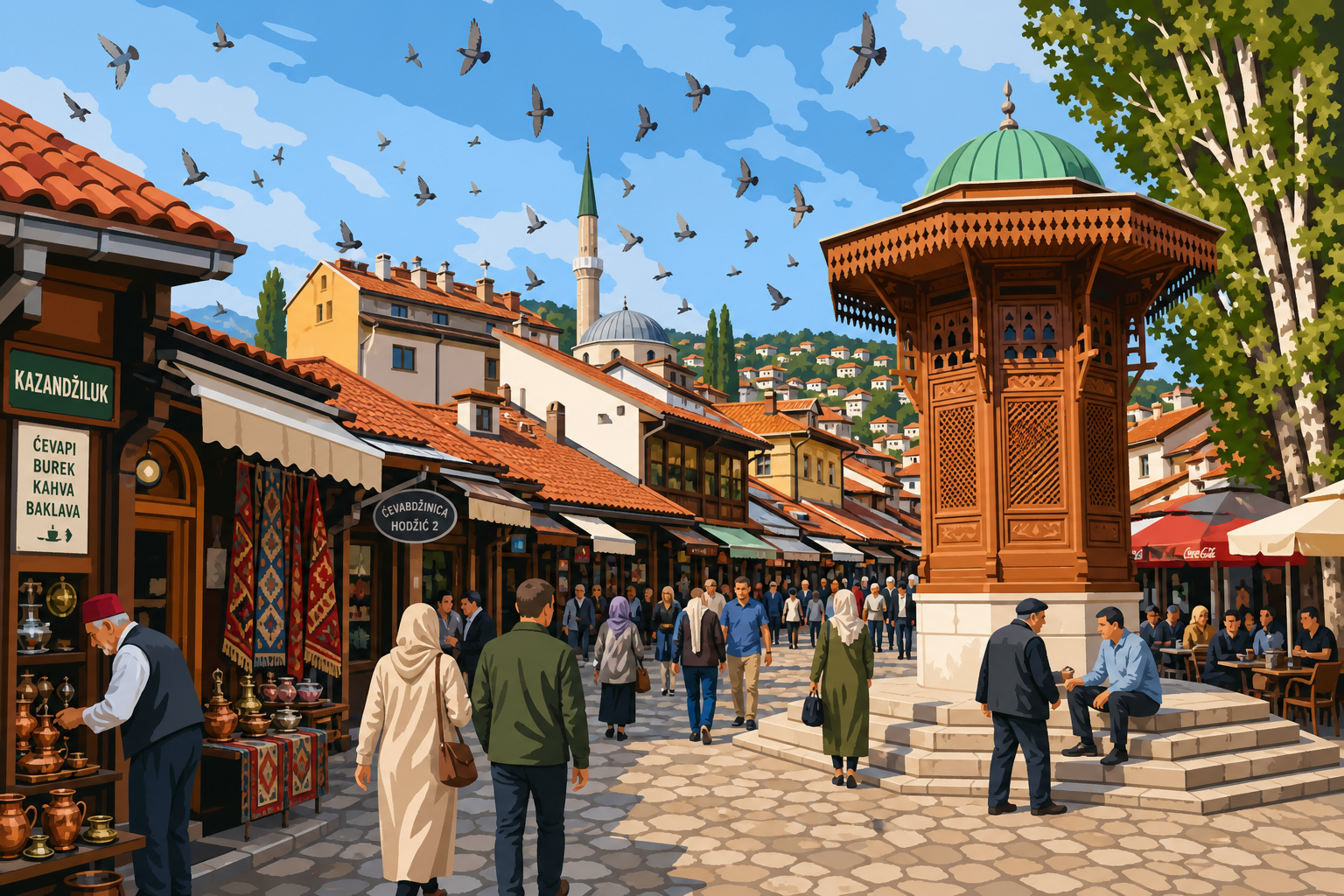
Grammar
biti. Sam, si, je
The verb biti means to be. Beginners live on three short forms. Say ja sam for I am. Say ti si for you are. Say on je or ona je for he is or she is. Put the pronoun first when you want clarity, as in Ja sam Ana.
- Ja sam Ana.: I am Ana.
- Ti si Emir.: You are Emir.
- On je vodič.: He is a guide.
- Ona je iz Sarajeva.: She is from Sarajevo.
Two ways to introduce yourself
Ja sam Ana states identity with biti. Zovem se Ana means “I am called Ana” or “my name is Ana.” Both are natural. For “nice to meet you,” say Drago mi je, which literally means “it is dear to me.”
- Zovem se Ana.: My name is Ana.
- Ja sam Emir.: I am Emir.
- Drago mi je!: Nice to meet you!
iz. Saying where you are from
Use iz plus a place for origin. Say Ja sam iz Amerike. Say Emir je iz Sarajeva.
- Ja sam iz Amerike.: I am from America.
- Emir je iz Sarajeva.: Emir is from Sarajevo.
- Ona je iz Mostara.: She is from Mostar.
Say again
Warm up with four lines you already know.
- Dobar dan!: Good day!
- Hvala!: Thank you!
- Molim?: Can I help you?
- Doviđenja!: Goodbye!
Lesson A. Pronouns and biti
Learn four pronouns in this lesson. Ja means I. Ti means you in informal speech. On means he. Ona means she. Pair them with biti. Say ja sam, ti si, on je, and ona je. Say them aloud until they feel automatic. Then build tiny truths. Say Ja sam Ana. Say Ti si Emir. Say On je vodič. Say Ona je prijateljica. We will meet more she words soon. For now Ona je Ana is enough. Beginners often drop the pronoun when the verb form is clear, but keeping Ja sam Ana is clearer and friendlier while you learn.
- Drill ja sam, ti si, on je, and ona je.
- Keep the pronoun when you introduce yourself with Ja sam.
Match the forms
Match each Bosnian form to English.
Lesson B. Meeting Emir
At Sebilj, Ana needs a meeting script. Start with a greeting from Lesson 1, such as Zdravo! Or Dobar dan! Then say Zovem se Ana. Or say Ja sam Ana. Add origin if you want with Ja sam iz Amerike. When Emir answers, reply Drago mi je! Listen for On je Emir, Ja sam Emir, or Zovem se Emir. All of those are fine. End with a smile and maybe Hvala when he offers help. Tomorrow you will drink kahva with Amira. In this lesson you only need to be Ana.
- Meeting order is Zdravo, then Ja sam or Zovem se, then Drago mi je.
- Reuse Lesson 1 greetings. Do not invent new ones yet.
Kod Sebilja
Baščaršija square by the Sebilj fountain. Pigeons scatter. Emir holds a small sign that says ANA.
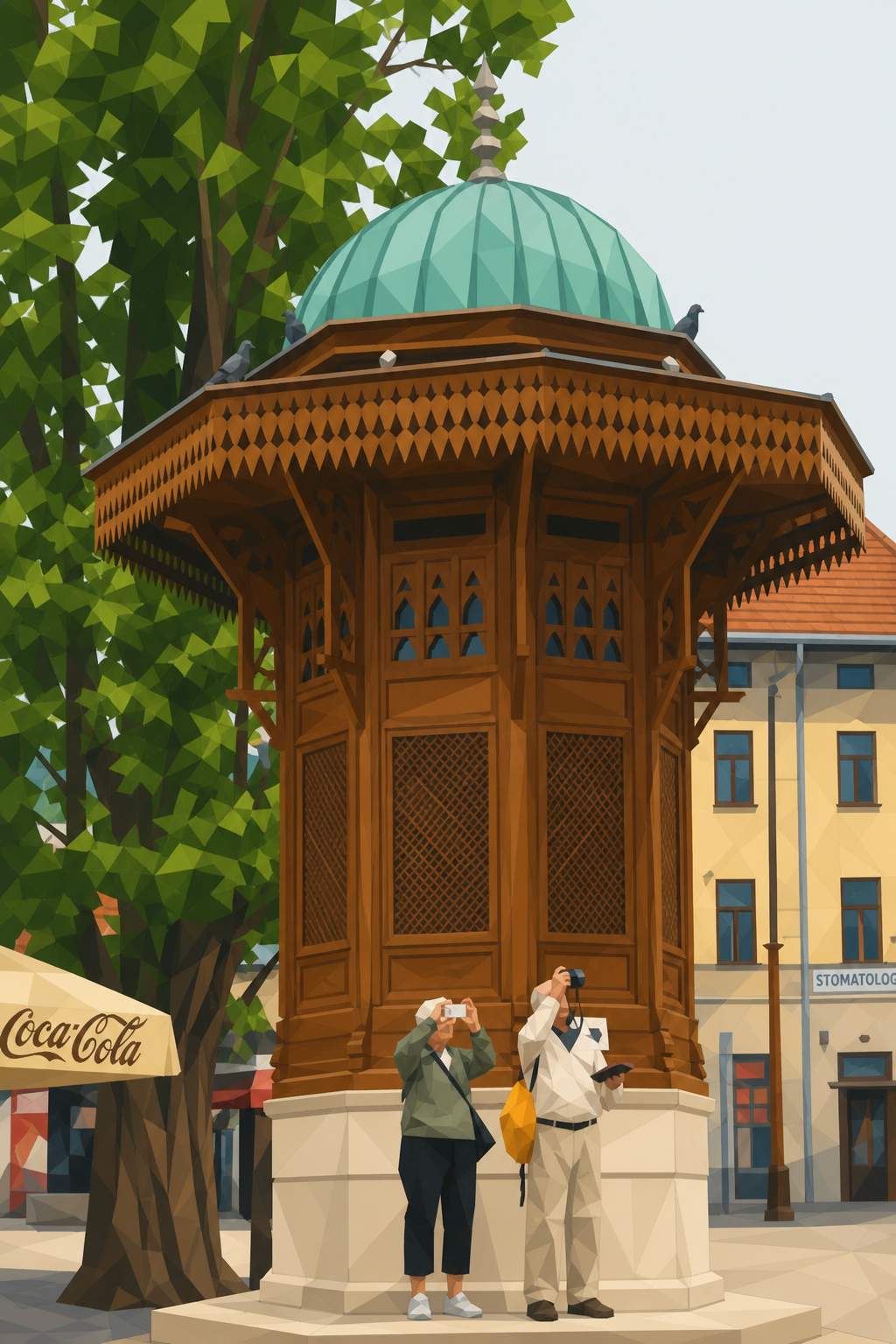
Play the full scene once. Then tap a line to hear it. On some lines you can record yourself for a short Speak Check.
Speak Check listens to your recording and sends back short tips.
Speak Check listens to your recording and sends back short tips.
Speak Check listens to your recording and sends back short tips.
Practice
Your keyboard may not have č ć š ž đ. Tap the accent buttons under each box to insert them.
Complete. Ja ___ Ana. (I am)
Hint: Short form of biti for ‘I’
Complete. Ti ___ Emir. (you are)
Hint: Short form for ‘you’
Complete. On ___ vodič. (he is)
Hint: One short word
How do you say ‘My name is Ana’?
Hint: Two words + Ana
Translate. Nice to meet you!
Hint: Three words
Say. I am from Sarajevo. (use Ja sam iz…)
Hint: Ja sam iz Sarajeva
What is the wooden fountain landmark called?
Hint: Starts with Se-
Fun facts
Sebilj means a public fountain
Sebilj started as a practical word for a public fountain kiosk. The term comes from Ottoman Turkish roots for water offered to everyone in the square. Sarajevo’s Sebilj is now a city icon and a favorite meeting point. When Emir says to meet kod Sebilja, he is using landmark language locals still rely on.
sam / si / je are clitics
The short biti forms sam, si, and je act like little grammar hitchhikers. In longer sentences they usually land in second position, right after the first word. Beginners do not need the full theory on day one. For now, keep your Ja sam patterns clear and let the rest come with practice.
Drago mi je is warm rather than stiff
Drago mi je is the standard way to say nice to meet you. It sounds warm at outdoor cafés in Sarajevo, Mostar, Tuzla, and small towns across the country. Ana and Emir use it because real meetings need more than a name. Learn it as one ready phrase, then say it like you mean the welcome.
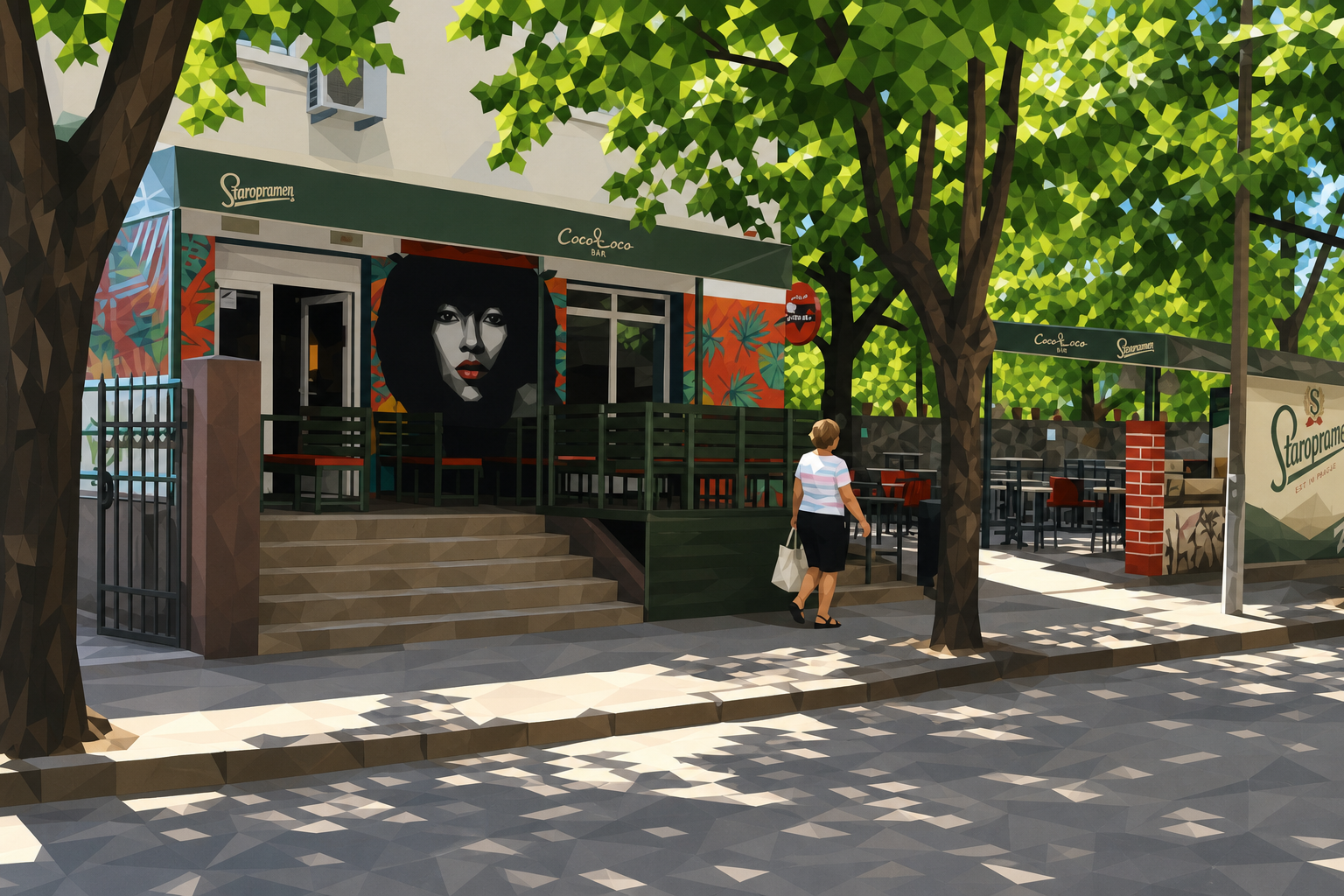
Pigeons optional, rendezvous required
Meeting kod Sebilja is local shorthand for a reliable rendezvous. Landmarks beat street numbers when your phone battery dies. Pigeons and photos are optional extras around the fountain. The useful skill is knowing how Bosnians point to a place everyone can find.
Čuj Bosnu. Ja sam… in a real teacher voice
Hear someone walk through Ja sam and self-introduction patterns outside our Ana/Emir studio takes.
Speaker · Lingo Hero · Introductions · focus ~45–60 seconds
Watch & listen
Lingo Hero on YouTube (YouTube Terms of Service (embed))
Listen for Ja sam…
Press play on the video above. After you have listened, show the gist question.
Bosnia today
Who is allowed to hold the highest offices
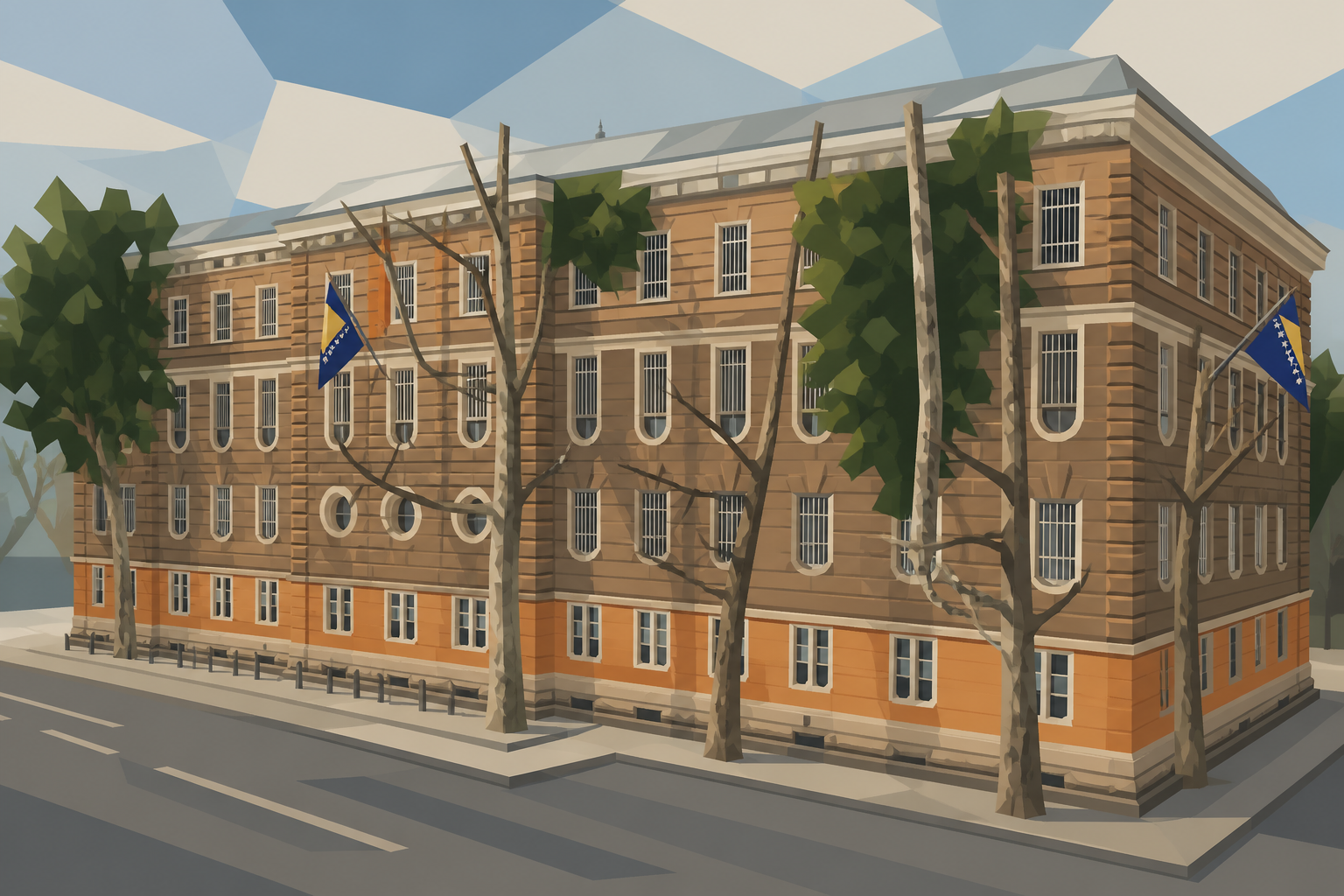
Bosnia and Herzegovina’s constitution still blocks some citizens from the highest state offices because of ethnicity. Key posts such as the tripartite Presidency and seats in the House of Peoples are reserved for Bosniacs, Croats, and Serbs as constituent peoples. Jews, Roma, and other citizens outside those labels cannot hold those offices. The European Court of Human Rights ruled against that exclusion in Sejdić and Finci in 2009, and the judgment has still not been fully implemented.
Wikipedia. Sejdić and Finci v. Bosnia and Herzegovina
Practice game
Unscramble the introductions
Unscramble to make today’s phrases (spaces ignored in checking. Type the full phrase).
Need č ć š ž đ? Use the accent buttons under each box.
sam ja Anase zovem Emirje mi dragoQuick review
A few words from this lesson, plus ones you missed before. Flip the card, then mark how it went.
Card 1 / 5
More resources
- How to speak Bosnian (YouTube). Companion video for Lesson 2
- Map. Sebilj, Baščaršija. Find the fountain before Lesson 3
- Next. Lesson 3. Brojevi i kahva. Numbers and coffee at Amira’s
Lesson quiz
Or open the full-page quiz: Lesson 2 quiz
Lesson 2 section quiz
1. What does ‘Ja sam Ana’ mean?
2. Which form means ‘you are’ (informal)?
3. ‘Zovem se Emir’ means…
4. How do you say ‘nice to meet you’?
5. ‘On je vodič’ means…
6. Sebilj is…
7. Which sentence means ‘I am from Sarajevo’?
8. ‘Ona’ means…
9. Which pair is correct?
