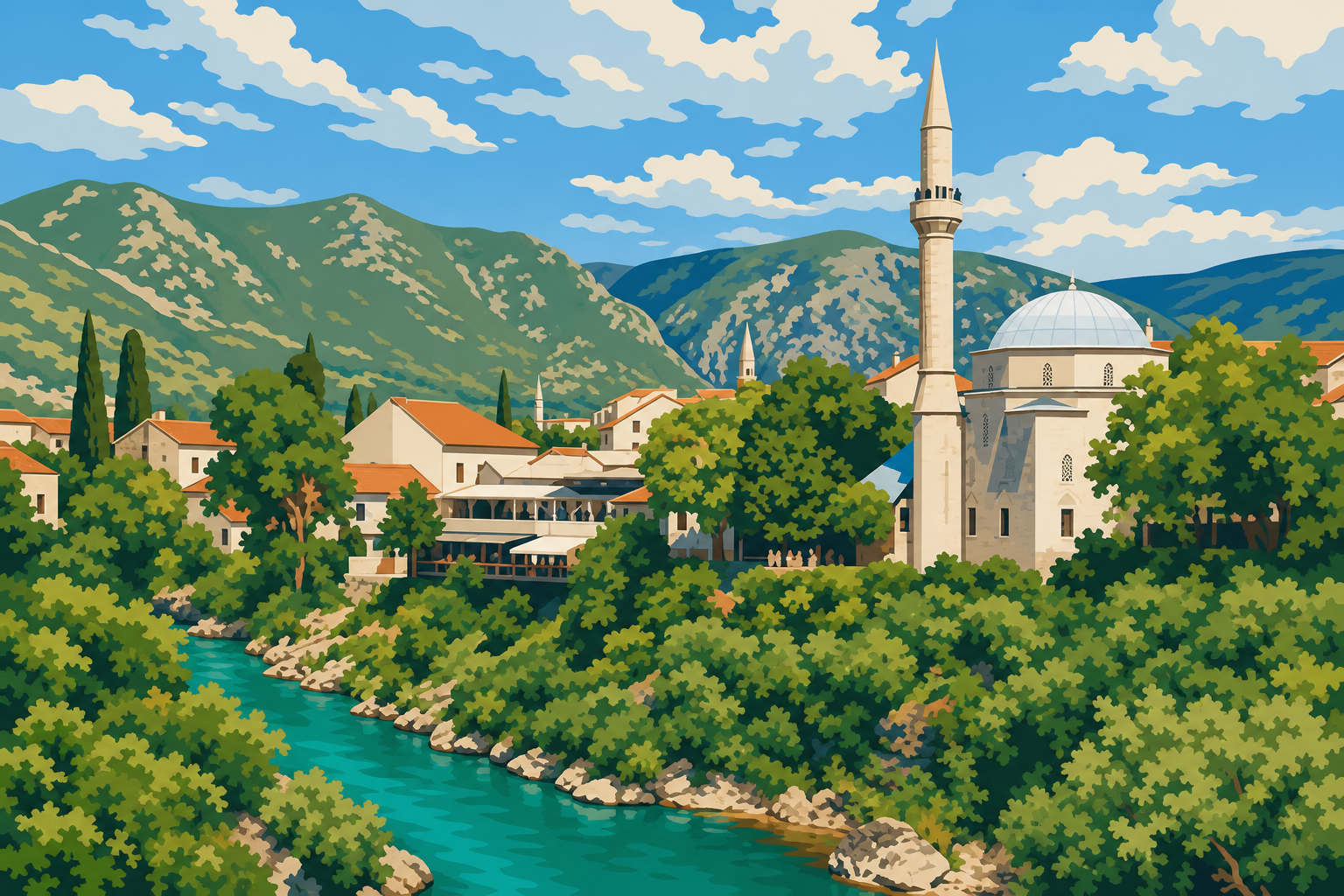
Zašto bosanski?
Lesson goals
Vocabulary
- Learn bosanski, jezik, Bosna i Hercegovina, and dobrodošli
- Meet the cast names Ana, Emir, Amira, and Mrvica
Grammar
- Know that Book 1 teaches ready phrases in the present tense rather than full case tables or conjugation charts.
- Use Latin script only from Lesson 1 onward. This course never teaches Cyrillic.
Culture
- Understand why this course teaches Bosnian specifically
- Learn the etymology and origin of the name bosanski
- See how Bosnian relates to Croatian and Serbian, then stay Bosnian-focused
- Know who speaks Bosnian, and who this course is written for
Watch the companion video
Watch when you can, then come back for words, dialogue, and practice on this page.
How to speak Bosnian (YouTube). Companion video for this lesson
A language of a whole country. Not only one city
Bosnian (bosanski) is a South Slavic language and one of the official languages of Bosnia and Herzegovina (Bosna i Hercegovina / BiH). The name comes from the historic region of Bosnia. People have used forms of this name for the speech of the land for centuries. In the 1990s, after independence, Bosnian was codified as a modern standard with spelling and grammar guides, alongside Croatian and Serbian as official languages of Bosnia and Herzegovina. Speakers often understand one another across those standards, but names matter. Calling the language Bosnian honors the country’s identity and the forms you will hear from the mountains to the Neretva, in Mostar, Travnik, Banja Luka, Sarajevo, and beyond. Book 1 starts Ana’s story in Sarajevo, but Lesson 0 is about the whole map.
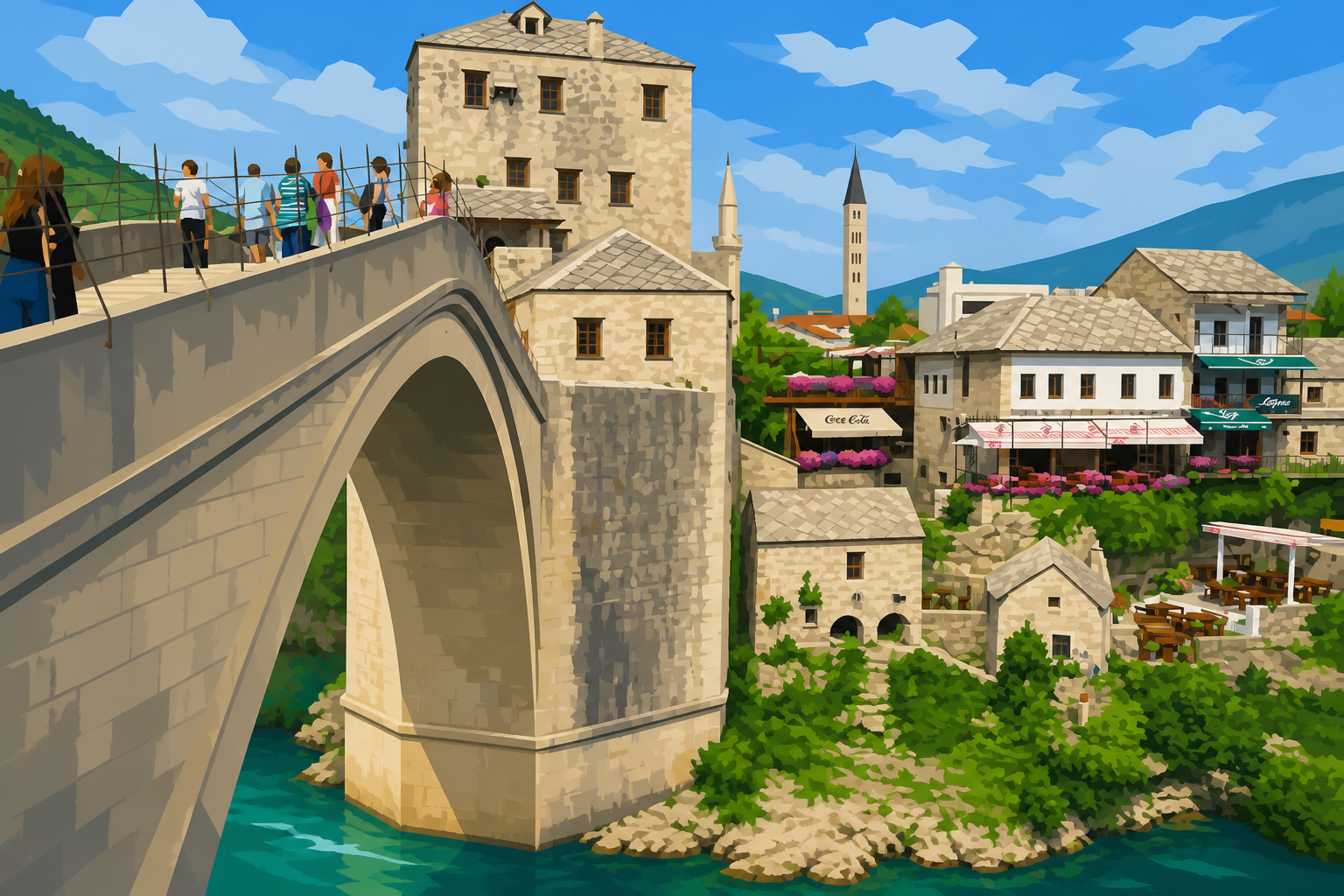
Lesson vocabulary
Tap a word to hear it. Use Loop and slower speed when you want to shadow.
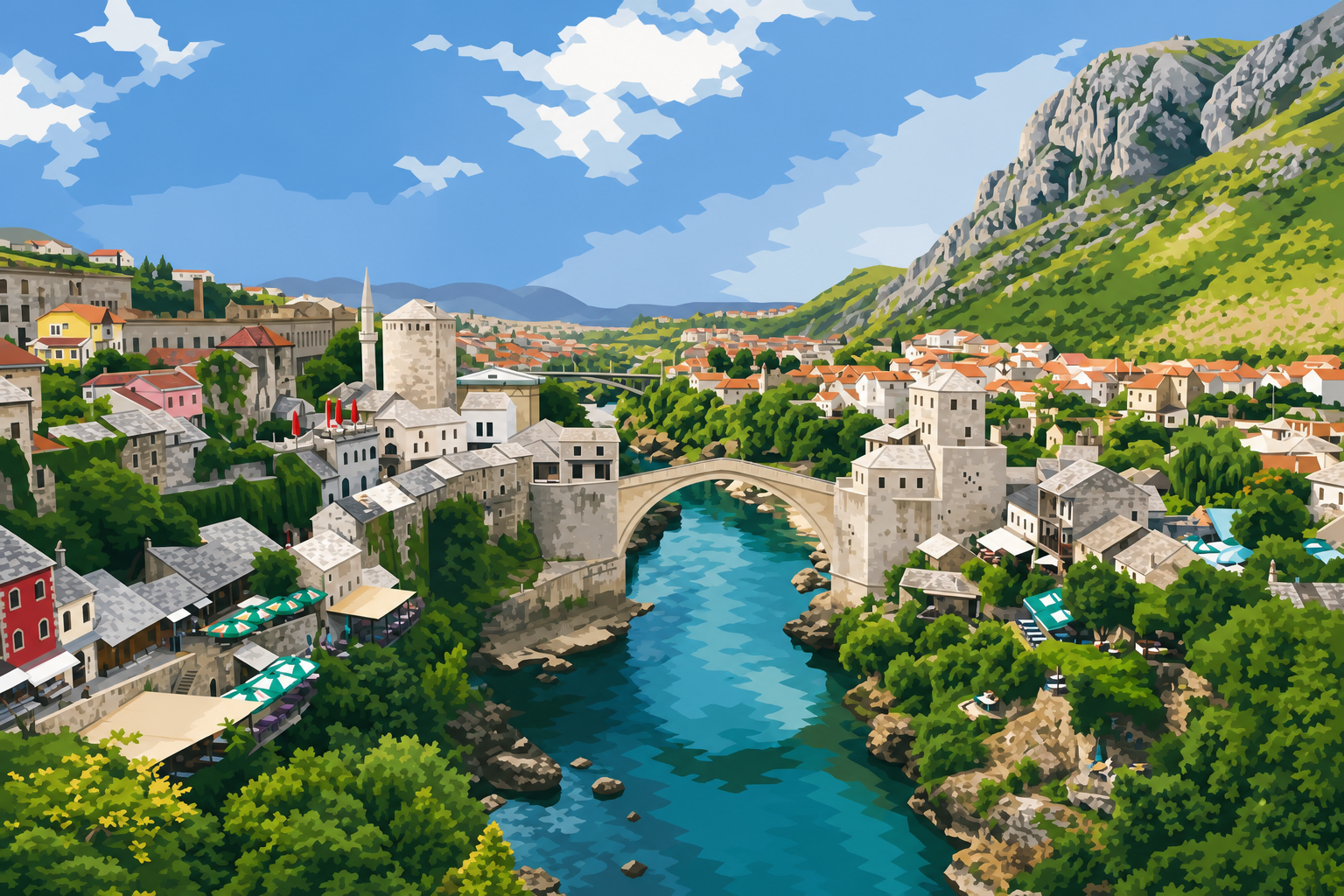
Grammar
This course teaches Bosnian. Latin script only
From Lesson 1 you will see and type Bosnian in the Latin alphabet (with letters like č, ć, š, ž, đ). Official Bosnian can also appear in Cyrillic, but this course never teaches or displays Cyrillic. One path, one script, less noise.
- bosanski jezik: Bosnian language (Latin spelling)
- Učim bosanski.: I am learning Bosnian.
Book 1 teaches phrases rather than full grammar tables
Bosnian grammar is real and complicated. Cases, endings, and long verb charts can overwhelm beginners. Book 1 does not teach that full system. You learn ready phrases in the present tense that you can say today. Order coffee, ask the time, introduce yourself, stay polite. Grammar labels appear only to help you notice a useful pattern. Full case tables and past-tense storytelling wait for Book 2.
- Kahvu, molim.: Coffee, please. (a ready phrase)
- Ja sam Ana.: I am Ana. (say the whole line)
Close neighbors, separate standards
Bosnian, Croatian, and Serbian share a common South Slavic dialect base (Štokavian) and are largely mutually intelligible. They are separate standard languages with their own norms, preferred words, and cultural identities. This course teaches standard Bosnian as used in Bosnia and Herzegovina. After today, we will not add “also in Croatian…” sidebars. We stay in Bosnian.
- kahva: coffee (common Bosnian form you will learn)
- hljeb: bread (Bosnian form you will meet later)
Lesson A. What is Bosnian, and where does the name come from?
Bosnian is the standard language taught and used as bosanski jezik in Bosnia and Herzegovina. The word bosanski comes from Bosna, the name of the region and the river Bosna, plus a Slavic adjective ending that roughly means of Bosnia. So the language name is tied to place rather than to a single invented brand. Standard Bosnian is built on the widespread Štokavian dialect shared with neighboring standards. The area sat at a crossroads of Slavic speech, Ottoman administration, and Austro-Hungarian schooling. That history left everyday Bosnian with familiar Slavic words plus older loanwords from Turkish, Arabic, and Persian that feel at home in café talk, food talk, and everyday politeness. You do not need the full history to start. You need one clear label. You are learning Bosnian.
- Say bosanski jezik aloud once. It means Bosnian language.
- The name points to Bosnia (Bosna), the place.
Match the orientation words
Match each Bosnian word or phrase to English.
Lesson B. Why Bosnian is not “just Croatian or Serbian,” and who speaks it
People often ask whether Bosnian is the same as Croatian or Serbian. The honest short answer is that speakers can usually understand each other, because the standards grew from the same dialect family. The honest longer answer is that they are not the same course, the same classroom label, or the same cultural home. Differences show up in preferred vocabulary, some spelling and sound habits, script choices in public life, and identity above all. Bosnian is an official language of Bosnia and Herzegovina. It is spoken by Bosniaks and by many other people across the country, and it is also spoken in diaspora communities worldwide. Neighbors may call their own standards Croatian or Serbian. Mutual understanding does not erase those names. This book teaches Bosnian forms used in everyday life in Bosnia and Herzegovina. From Lesson 1 we will not train you to compare three columns of vocabulary. We will train you to sound at home saying zdravo in Sarajevo.
- Mutual understanding is not the same as identical language identity.
- After Lesson 0, stay Bosnian-focused. There are no comparative sidebars.
Lesson C. Why learn Bosnian, and who these lessons are for
Why Bosnian? Because you care about this place and these people. You may visit Bosnia and Herzegovina for a short stay, move here for work, have family or partners with roots in the country, reclaim a home language from diaspora, or simply refuse a vague Balkans label. Book 1 is a survival path for travelers and newcomers. You will order food, find your way, talk about weather and rooms, meet people politely, and stay in the present tense. Bosnian grammar (cases, endings, long charts) is rich and complicated, so Book 1 does not teach that full system yet. You learn ready phrases you can use this week. This course is for absolute beginners and false beginners who read English. It fits adults and older teens who can spend about an hour a day with Latin-script Bosnian only. It is not a linguistics degree, a three-language comparative grammar, a Cyrillic course, or an A2 storytelling course. Past-tense stories and deeper grammar wait for Book 2. Lesson 0 is your map. Lesson 1 is your first step onto the stone streets of Baščaršija.
- If you can read this page in English, you are in the right audience.
- Expect phrases you can say rather than case tables to memorize.
- Plan about 35 minutes today, then about 60 minutes from Lesson 1.
A preview on the plane
Ana’s flight to Sarajevo. She reads a small orientation card while Emir waits to meet her tomorrow. For now, the narrator sets the scene.
Play the full scene once. Then tap a line to hear it. On some lines you can record yourself for a short Speak Check.
Speak Check listens to your recording and sends back short tips.
Speak Check listens to your recording and sends back short tips.
Speak Check listens to your recording and sends back short tips.
Practice
Your keyboard may not have č ć š ž đ. Tap the accent buttons under each box to insert them.
How do you say ‘Bosnian’ (the language) in Bosnian?
Hint: One word, ends with -ski
Translate. Language
Hint: One word
Write the full country name in Bosnian (three words. B… i H…).
Hint: Bosna i Hercegovina
How do you say ‘welcome’ (the form in today’s dialogue)?
Hint: Starts with dobro-
Which script does this course teach. Latin or cyrillic?
Hint: One word. Latin
Name the learner character in Book 1.
Hint: Three letters
Name the cat.
Hint: Starts with Mr-
Fun facts
Etymology in one line
Bosanski is basically “Bosnian / of Bosnia”. The language name is anchored in the place name Bosna.
Official rather than obscure
Bosnian is an official language of Bosnia and Herzegovina, used in schools, media, and daily life. Not a dialect label invented for tourists.
Mutual understanding, separate classrooms
A traveler who learns Bosnian will understand a lot next door. And still be studying a named standard with its own books, news, and pride.
Why we skip Cyrillic here
Official Bosnian can be written in Cyrillic as well as Latin, but this course teaches Latin only so you can focus your attention in one place. Master Latin Bosnian first. You can always explore Cyrillic later if you want.
Why we skip the big grammar table
Bosnian has cases and endings that can overwhelm beginners. Book 1 keeps you speaking with short, reusable lines. You will see grammar labels, but you learn phrases first. The big tables come later in Book 2.
Čuj Bosnu. One language, three names
Lesson 0 is about what Bosnian is. Hear a real explainer that compares Bosnian, Croatian, and Serbian so your ear meets the neighborhood of the language.
Speaker · Croatian with Mirsad · Language orientation · focus ~watch 60–90 seconds, then gist
Watch & listen
Croatian with Mirsad on YouTube (YouTube Terms of Service (embed))
Play the video. Listen for the idea that these standards are close, then pause.
Press play on the video above. After you have listened, show the gist question.
Bosnia today
A state built so one entity can block the rest
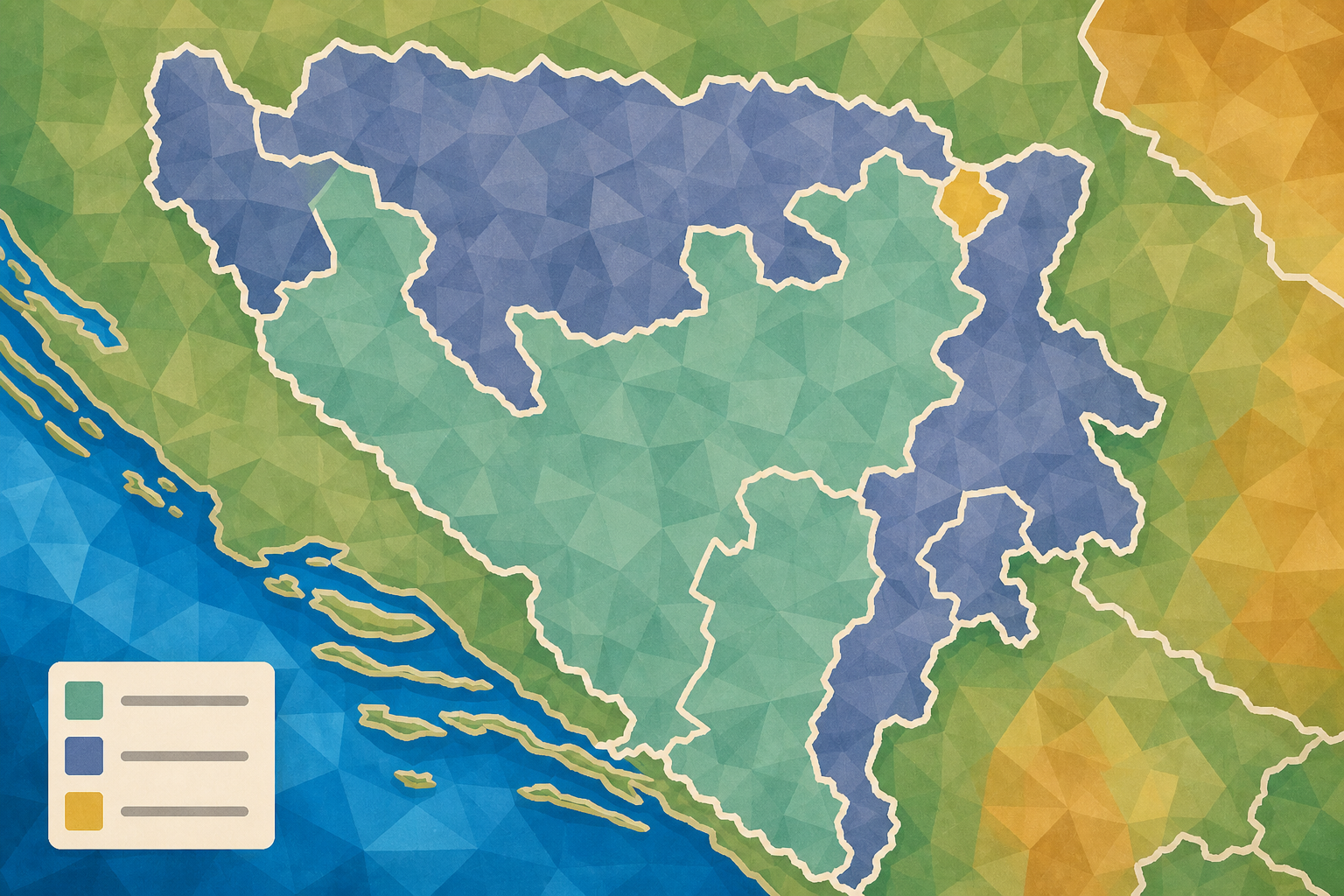
Bosnia and Herzegovina’s postwar constitution makes national decision-making easy to block. Dayton divided the country into two entities, the Federation of Bosnia and Herzegovina and Republika Srpska, and many state decisions require agreement across that structure. The design helped stop the war, but it also lets obstruction at entity level delay reforms needed for EU accession. Learning the language therefore starts inside a country whose basic map is still a postwar power-sharing machine.
Wikipedia. Political divisions of Bosnia and Herzegovina
Practice game
True or false?
Decide if each statement is true or false for this course.
This course teaches Latin-script Bosnian only.
Lesson 0 is mainly about conjugating verbs.
Bosnian, Croatian, and Serbian are largely mutually intelligible but are separate standards with their own identities.
From Lesson 1 we will constantly compare three language columns side by side.
Book 1 teaches full Bosnian case tables and conjugation charts from the start.
Quick review
A few words from this lesson, plus ones you missed before. Flip the card, then mark how it went.
Card 1 / 5
More resources
- How to speak Bosnian (YouTube). Companion video for this lesson
- Lesson 1. Zdravo, Sarajevo!. Start the language path after this orientation
- Book 1 curriculum. See all 30 lesson days
Lesson quiz
Or open the full-page quiz: Lesson 0 quiz
Lesson 0 section quiz
1. What does ‘bosanski’ refer to in this course?
2. The name bosanski is etymologically tied to…
3. How should you think about Bosnian vs Croatian/Serbian for this course?
4. Who speaks Bosnian?
5. Who is the primary audience for these lessons?
6. Which script does How to Speak Bosnian teach?
7. What is ‘jezik’?
8. After Lesson 0, the lessons will…
9. How does Book 1 handle Bosnian grammar?
